Chariot
0
Cleaning a trash can takes about 20 minutes, a hose, and dish soap. Keeping it clean is the part everyone gets wrong, so this guide covers both. The wash first, then the setup that means you're not back out on the driveway doing this again in three weeks.
The 20-minute wash
You need a hose or pressure washer, dish soap or an all-purpose degreaser, a long-handled brush (a toilet brush on a stick works, a car wash brush is better), and rubber gloves.
- Empty the can completely. Anything stuck to the bottom gets scraped out with a stick or dustpan, not your hands.
- Rinse it out. Tip the can on its side and blast the inside, bottom seam first. That seam is where the juice collects and where the smell lives. A garden hose with a jet nozzle handles a normal can. If yours has baked-on residue from a hot summer, a pressure washer earns its keep. We compared both in pressure washing vs. garden hose.
- Scrub with soapy water. Squirt dish soap in, add a few inches of water, and work the walls and bottom with the brush. For greasy residue, a biodegradable degreaser like Simple Green cuts it faster than dish soap.
- Disinfect. Vinegar or a diluted bleach solution, not both, never together. Which one depends on the can and what's growing in it. Full breakdown here: vinegar vs. bleach for outdoor bins.
- Tip it upside down and let it dry completely. A damp can starts smelling again within days because bacteria need moisture. This step is the one people skip, and it's why their "clean" can stinks by the weekend.
That's it. Twenty minutes, maybe thirty if it's bad.
If there are maggots
Different job. Kill them first, then wash. We wrote a full guide on maggots in your trash can: what causes them, six ways to kill them fast, and the only prevention that holds.
Here's the problem nobody mentions
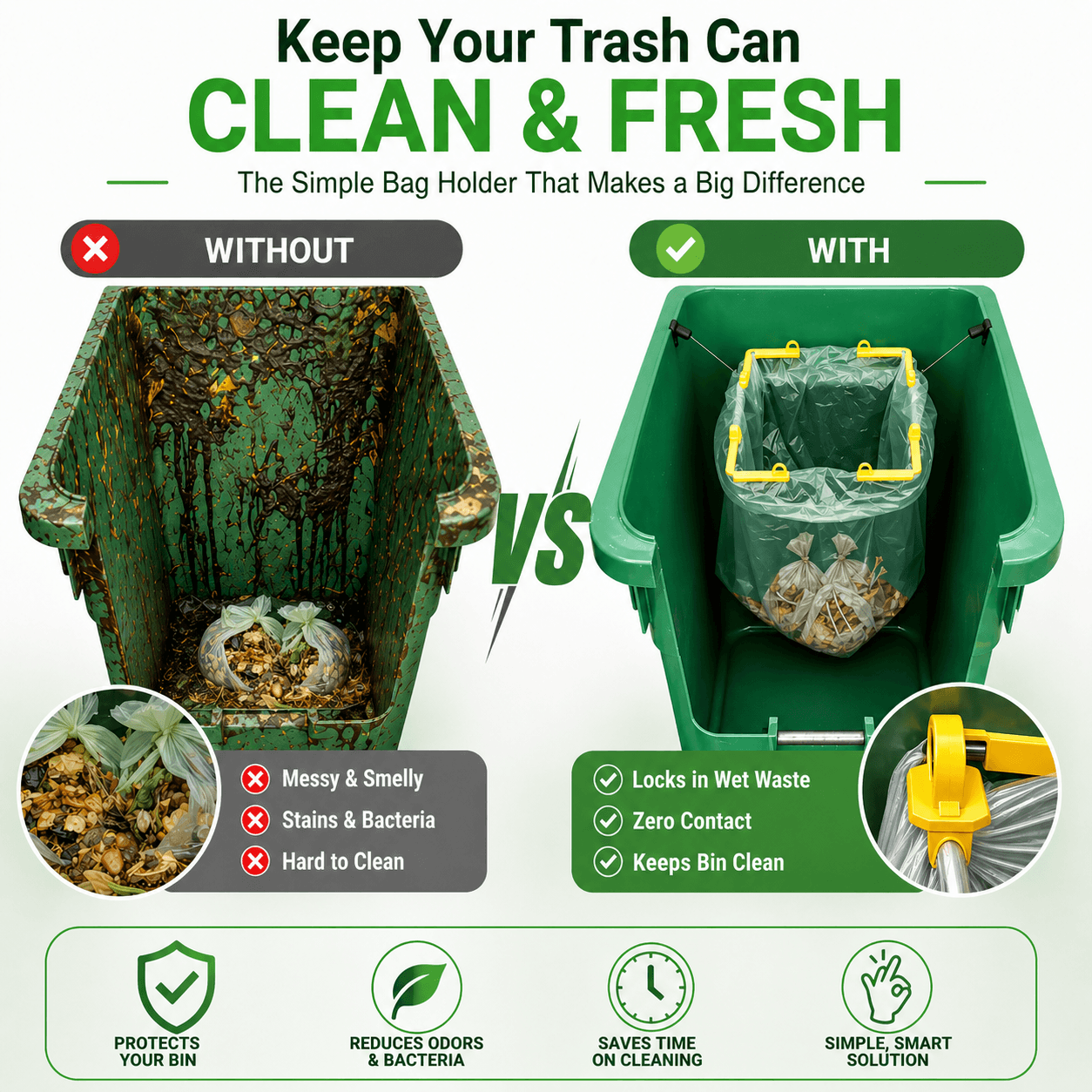
The can is spotless for exactly as long as it takes one bag to leak. One split seam, one puncture from a chicken bone, one bag that slides down the wall, and the juice is back on the bottom, cooking. In summer, that's a two-week cycle. So you're left with three options.
Option 1: keep washing it yourself. Free, minus your Saturday. Works if you enjoy it. Nobody enjoys it.
Option 2: pay a bin cleaning service. The trucks with the hot-water lift systems do a real job, and if a route runs in your neighborhood, monthly service typically lands between $180 and $540 a year depending on plan and bin count. We ran the honest math in is a trash can cleaning service worth it. Short version: the clean lasts until the first leaky bag, same as your DIY wash, and you're paying every single month for something that has no cure because it was never a disease. It's just contact between garbage and plastic.
Option 3: stop the garbage from touching the can. This is the prevention route, and it's the one we'd pick even if we didn't make a product for it. If waste never touches the walls, there's nothing to wash. Bin liners try to do this and mostly fail: they balloon, slip down, tear on the rim, and cost $40 to $65 a year per bin in the process. Full teardown here: the problem with oversized bin liners.
The one-wash method
Wash the can once, properly, using the steps above. Then hang a BagEZ frame inside it. It's a powder-coated steel frame (patented, U.S. 11,027,915 B2) that suspends a regular garbage bag in the middle of the can with an air gap on all sides, rated to 55 lbs. The bag you already buy does the containing. The can stays the way you left it after that first wash: dry walls, dry bottom, nothing for bacteria or flies to work with.
That's the whole pitch. Not that BagEZ cleans your can. It doesn't, and neither does anything else you leave inside a bin. It just makes the first proper wash the last one, for around the cost of two months of a cleaning service, once.
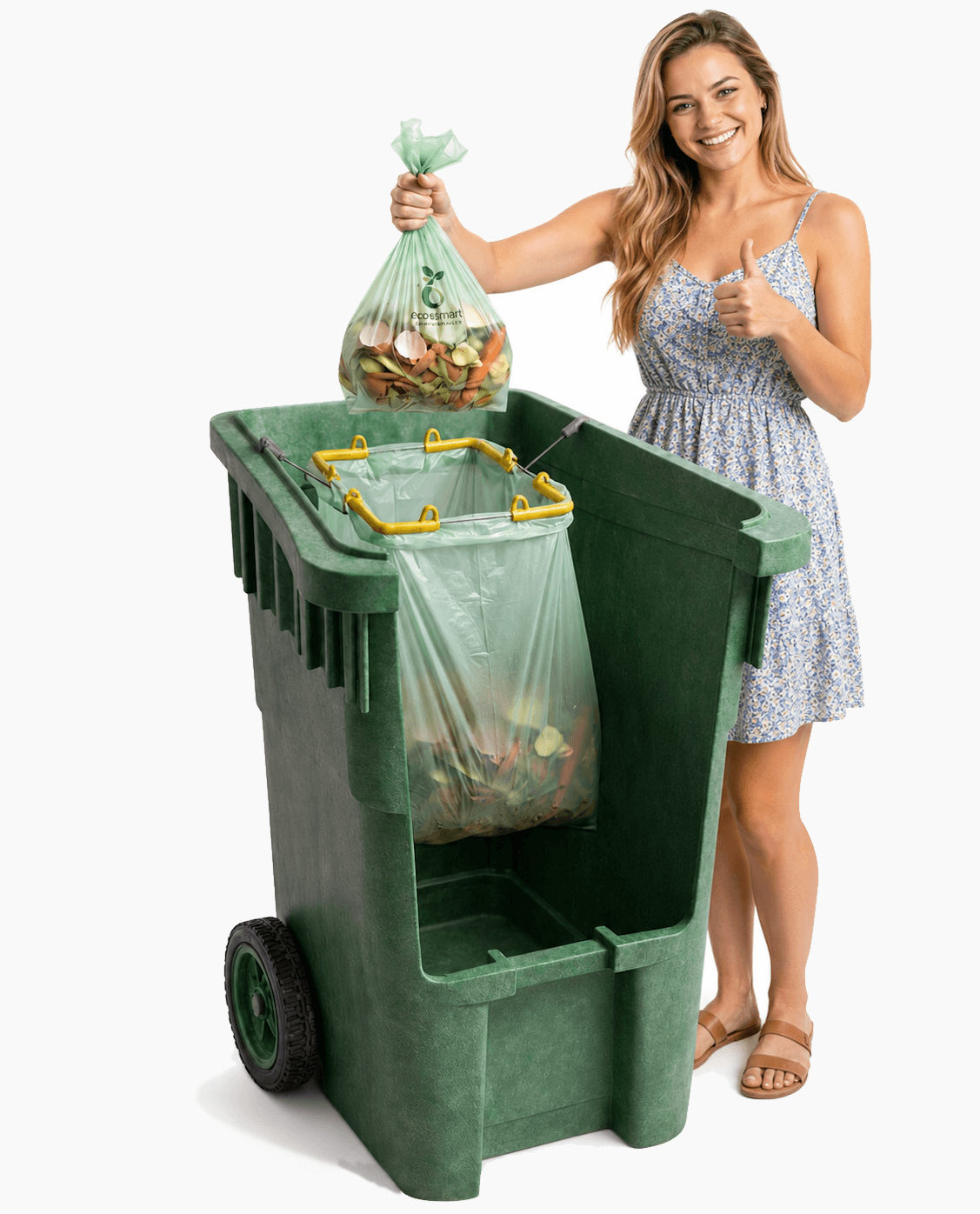
It works the same in a green bin, which gets dirty faster than any trash can. Compost bags are small, green carts are big, and the mismatch is the entire problem. We covered that in BagEZ and green bin food waste.
Keeping the smell from coming back
Whatever route you pick, three habits carry most of the weight: keep the can out of direct sun if you can, let it dry fully after any rinse, and double-bag meat scraps in summer. For everything else, including the baking soda and dryer sheet tricks and which ones actually do anything, see how to stop trash can smell.