Chariot
0

24/7 clean bins for HOAs
Somewhere in your board's next packet is a proposal from a mobile bin-cleaning company. Clean trucks, friendly reps, a line about restoring curb appeal. It's an easy yes to rubber-stamp, and most boards evaluate it on exactly one line item: price per visit. That's the wrong unit of comparison for a contract that runs through your community's streets, driveways, and budget for years.
This is written for the board side of that decision: evaluating a vendor contract at the community level. If you're weighing the cost of bin cleaning for your own home, our honest cost breakdown of trash can cleaning services covers the per-household math in more detail.

1. Street & Driveway Access
Bin-washing trucks are built for volume, not for cul-de-sacs. A truck sized for a wide commercial route can struggle on narrow HOA streets and tight homeowner driveways — blocking traffic during the service window, clipping mailboxes or landscaping, or simply not fitting where it needs to go.
Ask the vendor
What are the truck's dimensions and turning radius, and have they serviced a community with streets our width? What's their certificate of insurance for property damage caused by the vehicle or equipment? Can service windows be scheduled outside peak arrival and departure traffic?
2. Wastewater & Child Safety Liability
Cleaning a bin produces wastewater, and that water has to go somewhere. On many jobs, it's left to pool on the driveway or street until it evaporates or drains off. That's a slip hazard, sitting right where a kid playing outside is going to step straight into it — then track germ-laden runoff back across the sidewalk, into the garage, or into the house.
Ask the vendor
Is wastewater vacuumed into an on-truck reclaim tank, or does it drain onto the property? What's their general liability coverage in the event of a slip-and-fall tied to a service visit? Do they disclose runoff handling in writing, or only verbally during the sales call?
3. Service Continuity & Seasonal Coverage
Bin-washing is often seasonal or route-based, not a year-round guarantee. Providers scale back in the off-season, cancel routes in extreme weather, or drop communities that fall below a minimum stop count. That leaves residents unattended during exactly the stretch (summer heat, storm season) when odor and sludge buildup are at their worst.
Ask the vendor
Is service offered year-round, or does it pause seasonally? What's the SLA, including the notice period, for a missed or canceled visit? What happens to residents during a coverage gap, and do you offer a service credit?
4. The Real Cost, Multiplied Across Your Community
Per-bin cleaning rates run $15-$25 a month on a subscription plan, or roughly $180-$300 a year per home. That's manageable for a household. At the community level, it adds up fast: a 100-home HOA on a monthly per-bin plan is looking at $18,000-$30,000 a year, using that same per-bin rate. A 300-home community is $54,000-$90,000 a year. Board-negotiated bulk rates typically run below the consumer price above — but even at half that rate, it's still a five- or six-figure recurring line item for a service that resets to the same problem within days, because the underlying cause (waste touching the bin walls) is never addressed.
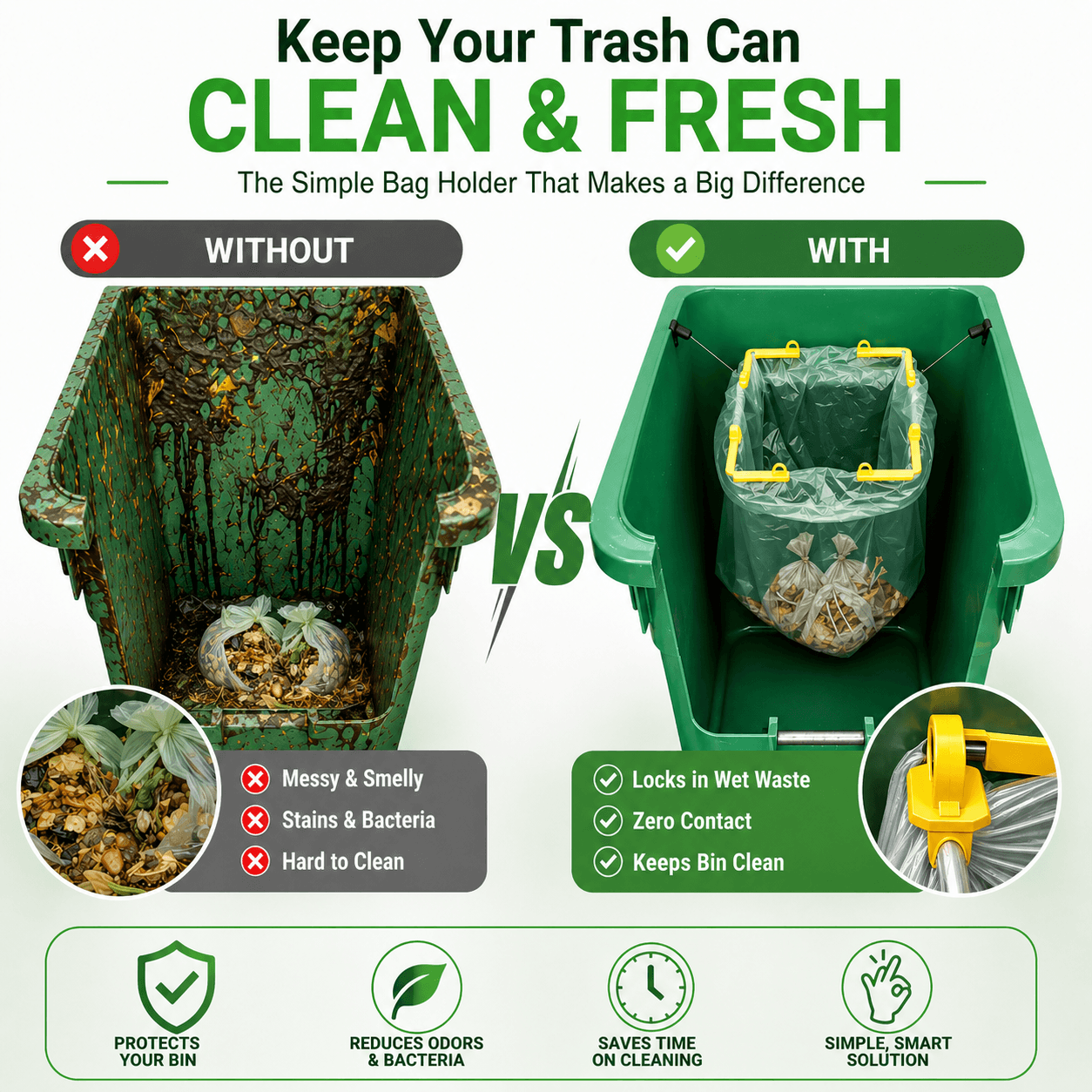
A suspended-liner system is a different category of spend. BagEZ's Liner Lock clips inside the bin and holds the bag open and off the floor, shrinking the available air chamber by up to 65% and keeping liquid from ever pooling at the bottom. Waste never touches the bin walls, so there's no sludge layer to wash out in the first place. That's a one-time hardware cost per unit against an open-ended service contract — see the full cost comparison in our cleaning-service-alternatives guide for the year-by-year numbers.


5. Equipment Damage & Bin Integrity
Collection trucks aren't the only thing that stresses a bin. Mechanical washing equipment (pressure jets, robotic arms, lift cycles) can crack or warp a bin's plastic shell over repeated visits. Once a bin has a hairline crack, liquid and sludge start working their way out through it, right onto the garage floor or driveway the vendor was hired to keep clean.
Ask the vendor
Who's liable if their equipment cracks, dents, or warps a bin: the vendor or the homeowner? Do they document bin condition before and after each visit? What's their replacement or repair policy, in writing?
It Doesn't Stop at the Bin
The same steel frame that clips inside a bin also works free-standing, held in one hand — a portable trash bag holder for whatever job doesn't happen next to a garage. Grounds crews and residents already use BagEZ frames for raking leaves, backyard get-togethers, and general yard cleanup; we've covered those uses in depth in our guides to keeping yard work organized, the best leaf bag holder for raking season, and hands-free cleanup at picnics and outdoor events. For an HOA, that's one purchase doing double duty: garage bin management and common-area cleanup crews, covered by the same hardware.
The Vendor RFP Checklist
| Criteria | Get this in writing before you sign |
|---|---|
| Street access | Truck dimensions, turning radius, property-damage insurance certificate |
| Wastewater handling | Reclaim-tank policy and general liability coverage for slip-and-fall |
| Service continuity | Year-round guarantee (or admission there isn't one) and a missed-visit SLA |
| Cost | A real 3-to-5-year projection, including fuel surcharges or price escalators |
| Equipment damage | A clear liability and replacement policy for cracked or warped bins |
The Bottom Line
Some boards will read this list and decide a washing vendor still makes sense for a periodic deep clean — that's a fair call, as long as the criteria above are written into the contract instead of assumed. Others will decide the smarter move is to skip the recurring line item altogether and fix the problem at the source. Either way, don't let price-per-visit be the only number your board reads.
BagEZ HOA Partnership & Resident Savings Program
BagEZ partners directly with HOA boards on a dedicated portal and community discount code, covering individual units or the full 3-in-1 Waste Management Bundle. Contact our program coordination team to run these criteria against your current vendor bid.
Email info@bagez.com →Frequently Asked Questions
What should an HOA ask a bin-washing vendor before signing?
Truck dimensions and a property-damage insurance certificate, how wastewater is contained rather than left to pool, whether service runs year-round or seasonally with a stated SLA for missed visits, a real 3-to-5-year cost projection, and who is liable if their equipment cracks or warps a bin.
How much does a bin-washing contract cost an HOA per year?
Per-bin consumer rates run $15-$25 a month per bin, or $180-$300 a year per home. Multiplied across a community, that's $18,000-$30,000 a year for 100 homes at that rate. Board-negotiated bulk rates are usually lower, but the cost still recurs indefinitely.
Can an HOA replace a bin-washing vendor entirely?
Some communities do, using a one-time suspended-liner system like BagEZ instead of a recurring washing contract. Others keep a vendor for periodic deep cleans and use BagEZ to keep bins clean between visits.
Who is liable if a bin-washing vendor damages HOA-owned or resident bins?
That depends entirely on the contract. Boards should get the vendor's liability policy for equipment damage in writing before signing, since mechanical washing equipment can crack or warp bin shells over repeated visits.
Shop BagEZ Hanging Trash Bag Holders
Ready to solve the problem? Choose the BagEZ size that fits your setup:
- BagEZ 10x13" Compact Holder — $19.99 · Ideal for kitchens, camping, RV & small spaces
- BagEZ 13x13" Medium Holder — $24.99 · Great for wheelie bins, garages & outdoor use
- BagEZ 16x17" Large Holder — $29.99 · Perfect for large bins, common areas & yard cleanup crews
- BagEZ 3-in-1 Bundle (Best Value) — $60.00 · All three sizes — one solution for every bin