Cart
0
⚡ Quick Answer: What Actually Stops Trash Can Smell?
- Immediate fix: Scrub with hot bleach solution (1 cup per gallon water), let dry fully
- Neutralize odour: White vinegar rinse + baking soda at the bottom of the bag
- Permanent solution: Stop wet waste touching the bin walls entirely
Smell coming from a green bin or compost cart specifically? See our complete BagEZ green bin holder guide. Or jump straight to long-term prevention →
📋 In This Guide
3 steps
To eliminate existing smell fast
5 tips
For permanent long-term prevention
4 bin types
Kitchen, outdoor, green bin, recycling
Steel frame
BagEZ — the permanent fix
Why Trash Cans Smell: The Real Cause
Garbage bin odors come from bacteria — specifically aerobic and anaerobic bacteria feeding on organic matter (food scraps, meat, dairy, liquids) that has made direct contact with the inside surfaces of the bin. According to the CDC's environmental health guidelines, bacteria in decomposing organic waste multiply rapidly and release volatile compounds that present both odor and potential health concerns in residential and commercial settings.
When a food waste bag leaks, bursts, or is not fully sealed, organic matter coats the bin walls and floor. Bacteria colonize this residue and as they break down the organic material, they release volatile organic compounds — the gases responsible for that characteristic bin smell.
💡 Why Sprays Don't Work
Deodorizing sprays only mask or neutralize current odor molecules. As soon as the bin is used again and new residue builds up, the smell returns. The only durable solution is to either consistently remove the bacterial film through cleaning, or prevent organic residue from building up in the first place.

▶ Watch: The Science Behind Bin Odour
How to Get Rid of Trash Can Smell Fast
Follow these three steps in order — skipping step one means step two won't work properly.
1
Deep Clean First
- Empty the bin completely
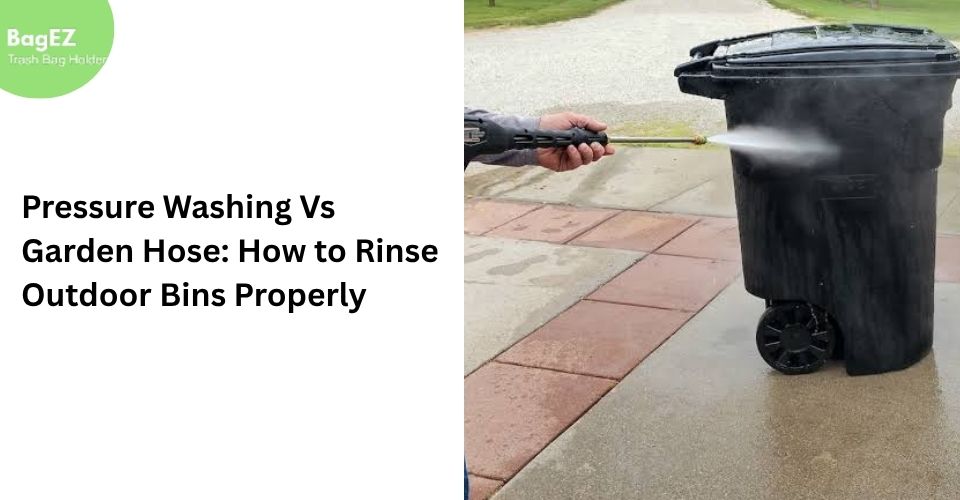
- Rinse interior with a hose to loosen residue
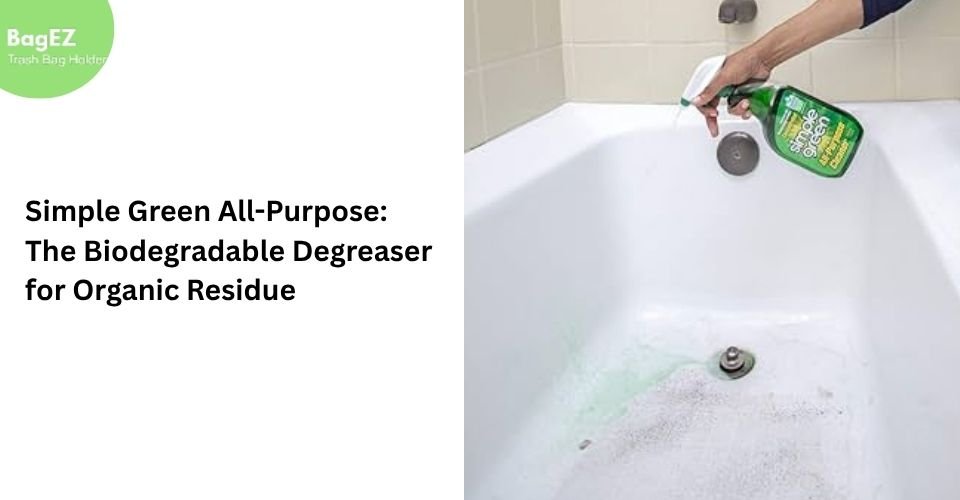
- Scrub with hot soapy water or bleach solution (1 cup bleach per gallon water)
- Focus on corners and the bin floor where residue accumulates
- Rinse thoroughly — let it dry completely before reuse
⚠️ Moisture promotes rapid bacterial regrowth — full drying is essential.
2
Apply a Treatment
Baking Soda
Sprinkle generously in the clean, dry bin before the first bag. Neutralizes acidic odor compounds and absorbs moisture.
White Vinegar Rinse
After cleaning, rinse with undiluted white vinegar. Neutralizes alkaline odor compounds and has mild antibacterial properties.
Activated Charcoal
Place a small bag inside the bin lid to absorb ambient odor compounds between uses. Reactivate in sunlight every few weeks.
3
Clean the Lid Too
The lid interior traps odor-producing moisture and residue from splashing waste or condensation.
- Scrub lid interior with the same bleach solution
- Allow to dry completely (separately from the bin body)
- For outdoor bins: prop the lid open for a few hours after cleaning — UV light further reduces bacteria on surfaces
How to Prevent Trash Can Smell Long-Term
These five steps, applied consistently, eliminate the conditions that cause persistent bin odour.
1
Stop Organic Waste From Touching the Bin
This is the single most effective thing you can do. If food waste never contacts the bin interior, bacteria has nothing to feed on and persistent odor cannot develop.
Small Indoor Bins
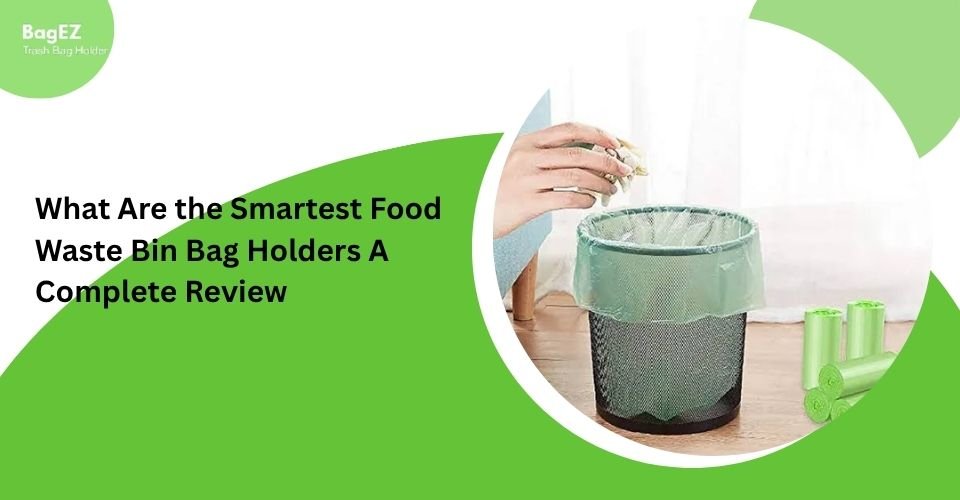
A standard kitchen bag as a liner prevents direct contact. Works well when the bag fits the bin properly.
Large 35–96 Gallon Outdoor Bins
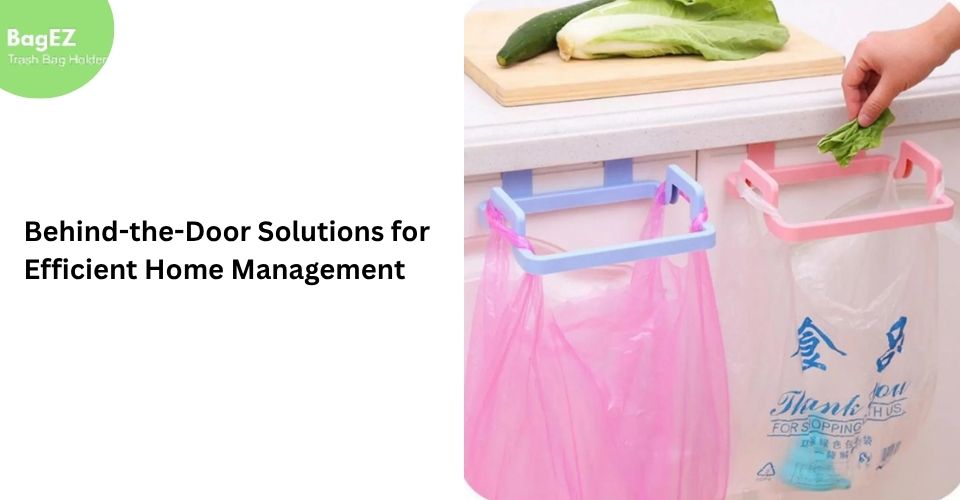
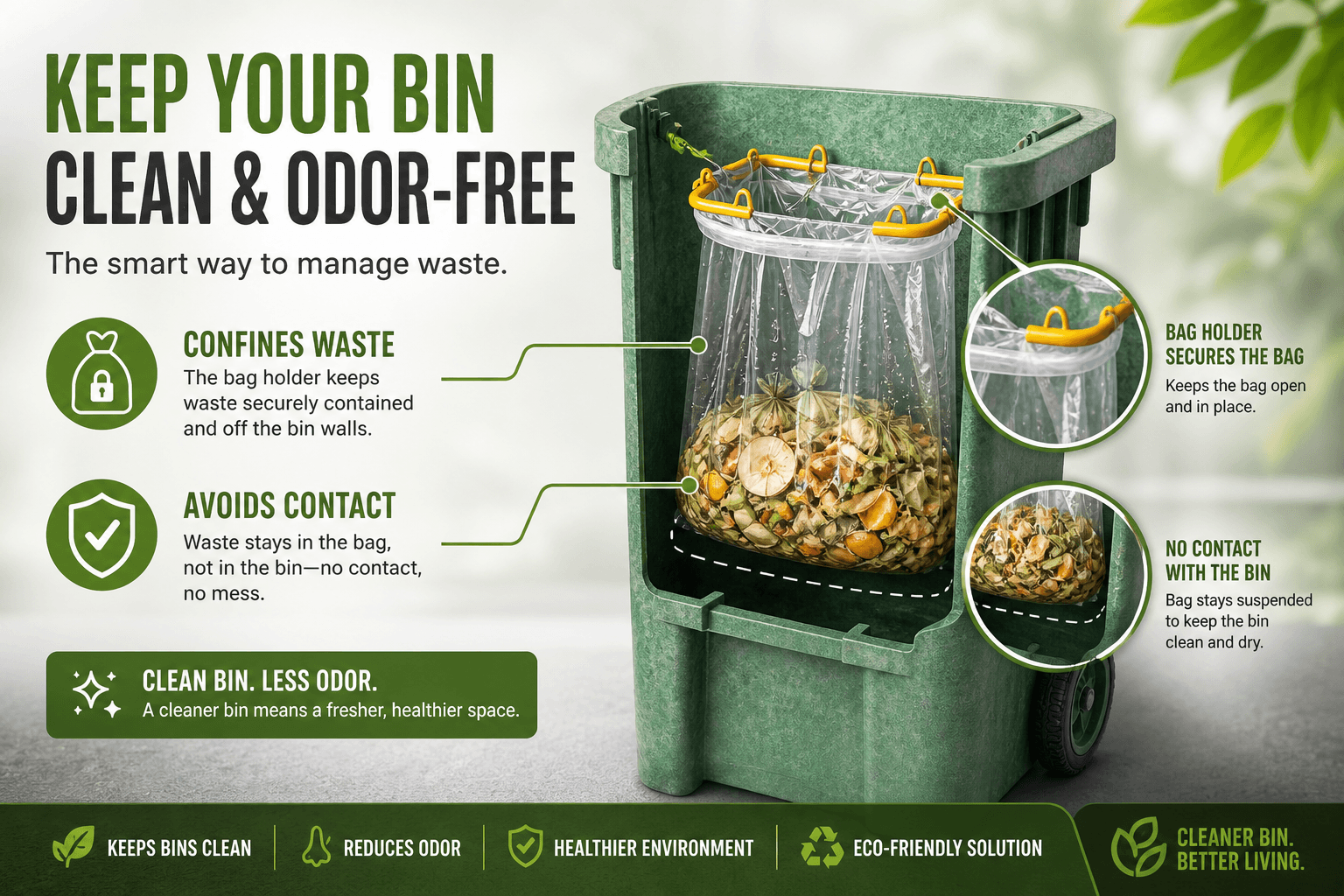
A suspended bag system like BagEZ holds a standard bag on a steel frame inside the bin — the bin interior stays completely clean.

2
Use Baking Soda Consistently
Even with a containment system, the waste inside the bag produces odors that can escape when the bin is opened. Sprinkle 2–3 tablespoons of baking soda inside the bag before use — this neutralizes odors at the source before they escape into your kitchen or garage.

3
Seal Bags Properly Before Disposal
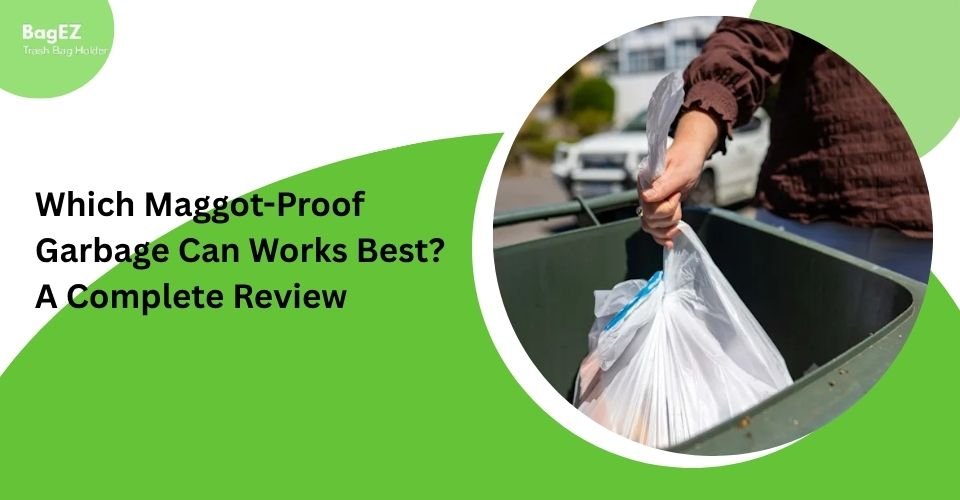
The majority of trash can odors in households that use bags come from one source: loosely tied or unsealed bags. A bag left open — even slightly — releases odor continuously until removed. Tie bags securely as soon as they are full.
4
Remove Waste Regularly
Organic waste left in a bin for extended periods produces progressively more odor as decomposition advances. For food waste, remove bags as soon as they contain organic material — rather than waiting until full.
5
Keep the Bin in Shade
Heat accelerates bacterial activity and decomposition. A bin in direct sunlight in summer is significantly more odorous than the same bin in shade. Position outdoor bins in a shaded area — a garage, covered area, or north-facing fence line — to slow odor production.
🔨 The #1 Odour Prevention Tool
End Bin Smell Permanently — Try BagEZ
BagEZ suspends your bag inside the bin on a steel frame. Wet waste stays sealed inside the bag — never touching the bin walls. No residue means no bacteria means no smell. Ever.
Trash Can Smell in Specific Situations
Different bin types have different odour profiles — here's the targeted fix for each.
Kitchen Trash Cans
Kitchen bins accumulate food scraps, packaging with food residue, and liquid from drink containers. The warm indoor temperature accelerates bacterial activity.
Most Effective Combination:
- Well-fitted liner + baking soda at the bottom
- Sealed bags changed every 2–3 days
- Monthly rinse with vinegar water
Outdoor Wheelie Bins
The hardest to keep odor-free. The dominant odour source is almost always food waste bags that have ruptured, leaving residue on the bin floor and walls.
Best Fix: BagEZ 13×13″ Liner Holder
Holds food waste bags elevated and protected inside the bin — wet waste never reaches the bin walls.
Green Bin / Compost Cart
Green bins contain exclusively organic material and are the most consistently odorous bin type. In summer, they can develop significant odors within days of collection.
Key Steps:
- Line the bottom with newspaper after each collection
- Use certified compostable bags — place in bin only when fully sealed
- For complete sizing and setup, see the BagEZ green bin holder guide
Recycling Bins
Recycling bins often smell because food containers are placed inside without rinsing. This is the simplest fix of all bin types.
Simple Fix:
A quick rinse of food and drink containers before recycling eliminates the majority of recycling bin odor at the source.
Most Popular for Wheelie Bins
BagEZ 13×13″ Trash Can Liner Holder
Suspends standard kitchen bags inside large outdoor bins. Steel frame holds the bag open, elevated, and protected from compression. Wet waste stays inside the bag — the bin stays permanently clean and odour-free.
Shop Now →
★★★★★ 4.9 · 30-Day Guarantee
Frequently Asked Questions
Common questions about trash can odour and how to eliminate it.
Get More Bin Tips Delivered
Seasonal cleaning guides, product tips, and odour prevention advice — sent occasionally, no spam.
Shop Related Products
For Outdoor Bins
BagEZ 13×13″ Liner Holder
Keeps bags sealed upright. Wet waste stays in the bag — bin walls stay permanently clean and odour-free.
Shop Now →Most Popular
Best Value
BagEZ Large 16×17″ Holder
For outdoor bins where odour is most common. Larger frame handles heavier bags over collection cycles.
Shop Now →Best Bundle
BagEZ 3-in-1 Bundle
Cover every bin in your home or property. Indoor, outdoor, and compact sizes — the complete no-smell setup.
Shop Now →Related Guides
→ The BagEZ Green Bin Holder — Complete Guide
→ Is Trash Can Cleaning Service Worth It?
→ Maggots in Your Trash Can: Complete Prevention Guide
→ Running a Can Cleaning Business? See How BagEZ Supports Professional Waste Services
→ The Problem With Oversized Bin Liners (And the Alternative That Works Better)