Cart
0
⚡ Quick Answer
Oversized bin liners fail in large outdoor bins because they balloon with trapped air, slip under the weight of trash, and still let food bags burst inside — coating the bin walls anyway. The better alternative is a BagEZ suspended bag holder: a steel frame that holds any standard kitchen bag open inside the large bin, keeping wet waste elevated and isolated so the bin stays genuinely clean.
Specifically about green bins or compost carts? See our complete BagEZ green bin holder guide.
In This Guide
$60+
Saved per bin per year vs liners
10 sec
Bag swap time
Any bag
13–55 gal standard bags
35–96 gal
Bins supported
The Core Problem: Standard Bags Don't Fit Large Bins
Most households use 13-gallon kitchen bags for day-to-day waste. But the 35-gallon, 64-gallon, and 96-gallon wheeled carts provided by most municipalities are far too large for standard bags — they don't stretch over the four corners or the rim. Trying to force a 13-gallon bag over the rim of a 64-gallon bin results in tearing at the corners.
The gap between the bags everyone has at home and the bins everyone is provided is where oversized bin liners come in. But the liner "solution" introduces a new set of problems that most people only discover after weeks of frustration.
Oversized Bin Liner Problems: What Actually Happens
Seven ways oversized liners fail in large outdoor bins
1. Air Trapping and Ballooning
When an oversized liner sits inside a large bin, it traps air between the bag and the bin walls. In warm weather, this ballooning prevents the lid from closing properly. The common fix — drilling holes in the bin — lets insects in and lets liquid seep out onto garage floors and driveways.
2. Slipping and Sliding
As trash accumulates, the weight pulls the bag down and inward, drawing the top edge below the bin rim. Large rubber bands stretched over the rim help temporarily but break over time or snap back sharply when removing — which can injure hands.
3. The Liner Still Gets Dirty
Small food waste bags inside the liner get compressed by heavy items, burst, and coat the inside surfaces. The bin becomes dirty inside the liner — and when the liner is removed, residue transfers to the bin walls. The very problem you bought the liner to prevent still happens.
4. Cost
Large bin liners for 35–96 gallon bins typically cost $0.75–$1.25 per bag, used weekly — that's $40–$65 per year per bin. Especially wasteful for green bins, which most households fill only 20–30% of capacity with small bags of food waste. According to the EPA's materials and waste data, plastic bag waste is one of the fastest-growing residential waste streams.
5. Weight Limits and Collection Refusals
Most cities have maximum bag weight regulations, typically 40–55 lbs per bag, to protect waste collectors and sorting equipment. Large bin liners loaded with a full week of household trash frequently exceed these limits, risking collection refusal.
6. Maggot Access
Large bin liners gather at the rim, creating gaps and folds between the liner and the lid. Even with a lid, these gap points remain accessible to flies. Combined with mixed wet and dry waste inside the liner, bin liners do not reliably prevent maggot infestations.
7. Environmental Impact
Large bin liners — particularly thick 3-mil liners — represent significant plastic usage. A household that uses a large liner weekly generates 52 liners per bin per year. Most waste management facilities send thick plastic liners to landfills rather than recycling them.
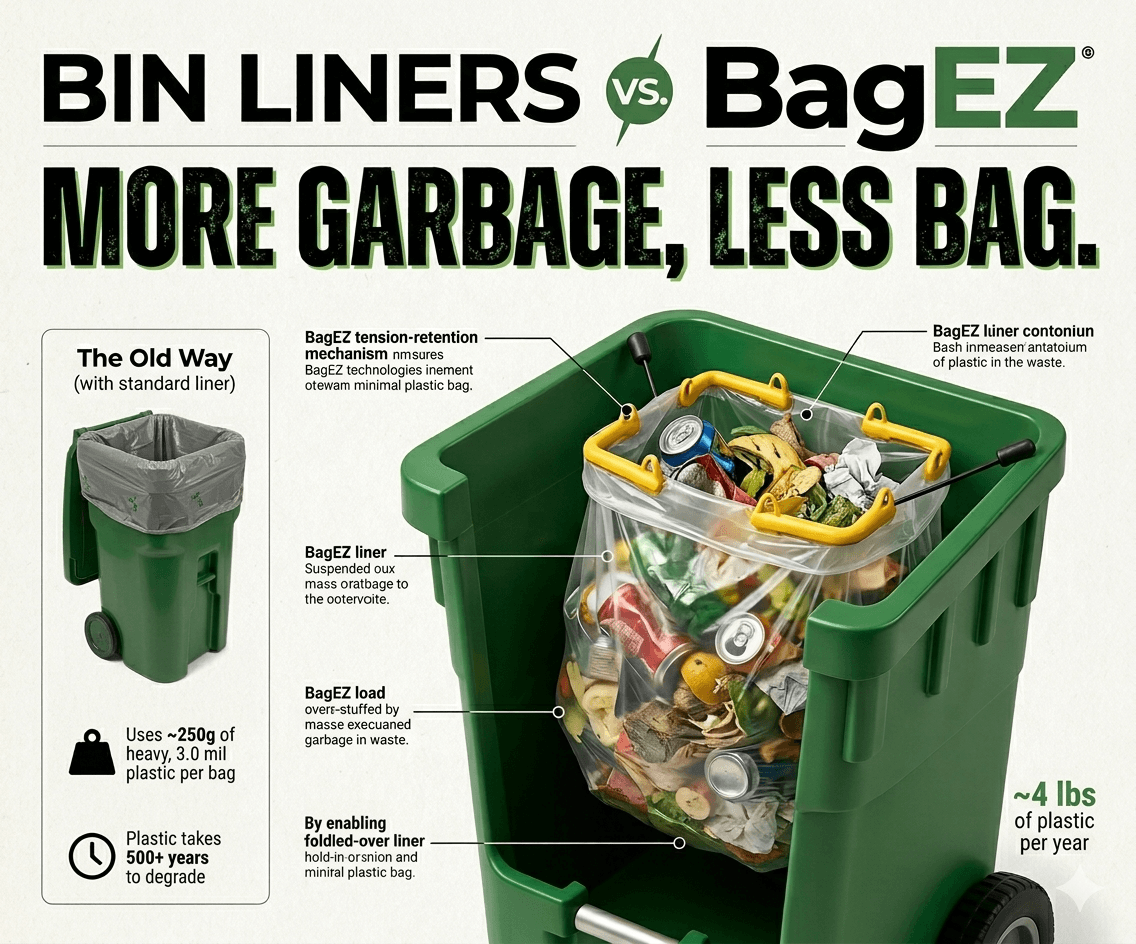
 BagEZ inside a 64-gallon wheeled bin — kitchen bag suspended in the center, bin walls stay clean
Stop buying oversized liners that don't work
One BagEZ frame. Any standard bag. Any large bin. Pays for itself in the first year.
The Alternative: BagEZ Trash Can Liner Holder
BagEZ approaches the problem differently. Instead of trying to line the entire large bin, it holds a standard kitchen bag inside the large bin on a steel frame, in the center of the bin where the actual messy waste goes.
Use Bags You Already Have
Standard 13–55 gallon kitchen bags fit on the BagEZ frame. No oversized specialty bags. No bulk orders. The bags you already buy at any grocery store — plastic, compostable, biodegradable, or thin cloth (not paper).
No Ballooning, No Slipping
Because BagEZ doesn't try to line the entire bin, there is no trapped air between a liner and the bin walls. The frame holds the bag open in the center of the bin, clipped securely to the rim. It doesn't slip because the frame is locked in place.
Bags Are Protected From Compression
The most common cause of bag rupture in large bins is compression — heavy items crushing food waste bags piled underneath. BagEZ holds the food waste bag elevated and isolated from the rest of the bin's contents. Heavy dry waste falls below and around the frame; it doesn't pile on top of and compress the food waste bag.

The Bin Stays Clean
Because wet and food waste stays inside the protected elevated bag, the bin interior doesn't accumulate the organic residue that causes odors and attracts maggots. The bin may need an occasional rinse, but the weekly deep-cleaning cycle caused by liner failures is eliminated.
Lower Ongoing Cost
BagEZ is a one-time purchase. You continue using standard kitchen bags at $0.05–$0.15 per bag instead of $0.75–$1.25 bin liners. At one bag per week, the cost difference is $35–$60 per year per bin. BagEZ typically pays for itself within the first year of use.
A Hybrid System for Large Bins
One of BagEZ's key practical advantages is that it creates a two-zone system: wet waste — the source of odors, residue, and maggot conditions — goes into the suspended bag on the frame. Dry, bulky, and non-messy household waste goes directly into the bin below and around the frame. The bin isn't underutilized while still keeping the messy waste fully contained. For green-bin-specific sizing and setup, see the BagEZ green bin holder guide.
When Bin Liners Still Make Sense
To be fair, full bin liners are still the right choice in some situations: for small indoor bins where a standard kitchen bag fits over the rim comfortably; for commercial or high-volume bins where the volume of waste makes a full liner more practical; and for bins used exclusively for dry waste where liquid residue and odor aren't concerns.
The problem arises when large oversized liners are used in large outdoor wheeled bins for mixed or organic waste — which is exactly where they perform least reliably and cost the most.
Get bin tips and BagEZ updates
Practical guides on keeping large outdoor bins clean and odor-free — sent occasionally, no spam.
Frequently Asked Questions
Shop BagEZ
BagEZ 10×13″ Hanging Holder
Kitchen · Camping · RV · Office
Holds 13–33 gallon bags inside smaller indoor bins. Clips to the rim, bag stays open and stable.
$19.99
Shop NowMost Popular
BagEZ 13×13″ Liner Holder
35 · 64 · 96 Gallon Wheeled Bins
The go-to for large outdoor bins. Standard bags stay elevated, isolated, and sealed — no liner needed.
$24.99
Shop NowBagEZ 3-in-1 Bundle
Every bin size covered
The complete system for every bin in your home — indoor, outdoor, and large wheeled bins.
$60.00
Shop Now