Cart
0

Most people get their recycling setup wrong for the same reason: they buy bins when what they actually need is better bag management.
Here's the problem. A standard recycling bin is one container. But your municipality probably has three or four separate streams — glass, plastic, paper, maybe organics. One bin means one stream. Three streams means three bins, which means a corner of your kitchen that looks like a sorting facility.
There's a simpler way. And it starts with rethinking what's actually doing the work: the bag, not the bin.
Why Recycling Bags Keep Failing
Standard recycling bags — the clear or blue ones most municipalities recommend — have a fundamental design problem: they're bags. Bags don't stand up on their own. They need something to hold them open, or they collapse the moment you're not actively filling them.
Most people solve this by putting the bag inside a bin. But then you're back to the one-bin-one-stream problem, and you're not actually using the bag's capacity properly. The bag bunches at the bottom, the top collapses, and you end up with a half-filled bag that takes up the same space as a full one.
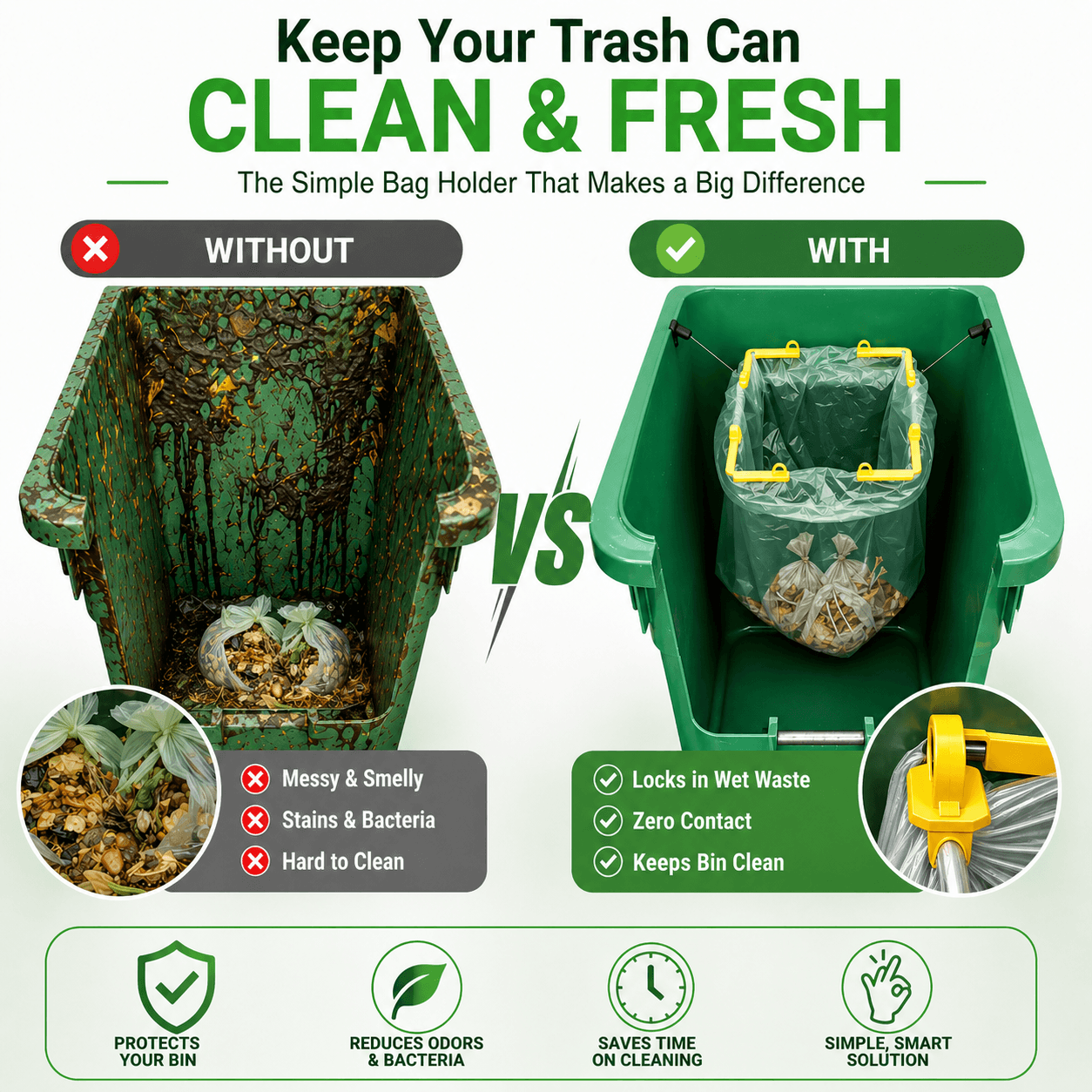
A recycling bag holder solves this at the source. Instead of stuffing a bag inside a bin, you hold the bag open from the outside, letting it fill fully and stay organised without needing a rigid container underneath it.
What a Good Recycling Bag Holder Actually Does
A recycling bag holder isn't complicated — but the right one does several things at once:
- Holds the bag fully open so you can drop items in without wrestling with the bag
- Keeps the bag stable so it doesn't tip when you toss something in from across the room
- Works with standard bag sizes so you're not locked into proprietary bags
- Has a small enough footprint that you can run multiple holders side by side for different streams
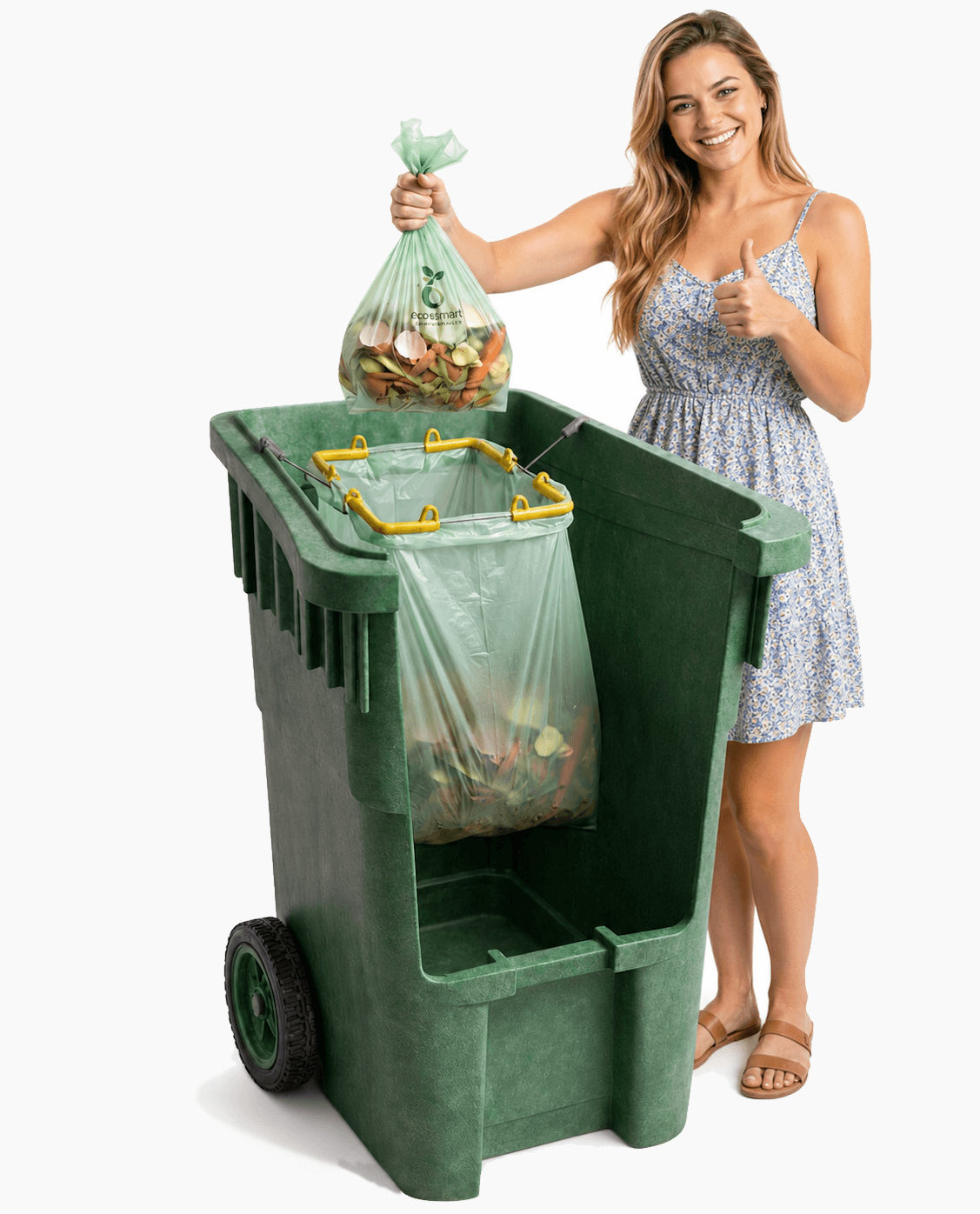
That last point is key. A frame-style holder like BagEZ has a slim profile. You can line two or three of them up along a wall or in a garage corner and sort glass, plastic, and paper into separate bags simultaneously — without needing three separate bins taking up three times the space.

Building a Multi-Stream Recycling Station at Home
Here's the setup that works for most households with 2–4 people and standard municipal recycling requirements:
Step 1: Know your streams
Check what your municipality actually collects and in what format. Most areas want:
- Mixed recycling (plastic, metal, glass) in a clear bag
- Paper/cardboard separately, or mixed in
- Organics/food waste in a certified compostable bag
Some cities are single-stream — everything goes in together. Others separate by material. This determines how many sorting points you need.
Step 2: Choose your location
The recycling station goes where sorting happens, not where the bags get stored. For most homes, that's the kitchen for organics and plastic, and a garage or mudroom corner for paper and larger volumes.
Don't put the recycling in a cupboard. Items that get sorted in the dark don't get sorted.
Step 3: Set up a holder per stream
This is where the bag holder setup pays off. Instead of three bins, you run two or three BagEZ frames side by side, each holding an open bag for a different stream. The total footprint is the same as one bin, but you have three separate sorting points.
Label each bag with a strip of masking tape on the frame if you live with people who don't remember which is which.
Step 4: Use the right bag for each stream
- Organics/green bin: Certified compostable bags (required by most municipalities)
- Mixed recycling: Clear blue bags or whatever your city requires — check the rules
- Paper: Paper bags, cardboard box, or a clear bag — depends on your program
Step 5: Set a full-bag routine
The biggest recycling failure isn't sorting — it's the full bag that sits there for two weeks because someone forgot to tie it and take it out. Set a clear day for each stream (usually tied to your collection day) and stick to it.

The Garage Recycling Station
For households that generate higher recycling volumes — larger families, home-based businesses, or people doing a renovation — a garage-based setup makes more sense.
The setup is the same in principle, just scaled up. Use larger bags (kitchen catchers or contractor-size) in BagEZ frames, one per material stream. Keep a paper box nearby for cardboard flats. Label everything.
The advantage of a garage station is space: you can store full bags there until collection day without cluttering your kitchen, and you have room to deal with bulky items like boxes that need to be broken down first.
Common Recycling Bag Holder Mistakes
Mistake 1: Using a bin as a bag holder
A bin inside a bag is the wrong way around. The bag should hang open, not be stuffed inside a rigid container. When the bag is inside the bin, you're limited by the bin's volume and the bag never fills properly at the sides.
Mistake 2: Buying holders that only fit one bag size
Your municipality might change requirements. You might switch bag brands. A holder that's sized for one specific bag is going to cause problems eventually. BagEZ works with a range of bag sizes, which means you're not locked in.
Mistake 3: Putting the station in the wrong spot
Out of sight is out of mind. If the recycling station is in a cupboard, a basement, or anywhere that requires extra effort to reach, sorting rates drop. The station should be on the route between where waste is generated and where it exits the house.
Mistake 4: One bag for everything
Even in single-stream cities, contamination is a real problem. A recyclable item contaminated with food waste can cause an entire bag to be rejected at the facility. Keep organics and recycling separate from the start — it takes one extra bag and one extra holder, and it protects your whole stream.
Recycling Bag Holder vs Recycling Bin: Which Is Better?
| Feature | Recycling Bin | Bag Holder (BagEZ) |
|---|---|---|
| Bag stays open on its own | Only if bag fits the bin | Yes — always |
| Works for multiple streams | One bin = one stream | Run multiple frames side by side |
| Floor space per stream | Full bin footprint each | Compact frame, stackable side by side |
| Bag change time | Requires removing bag from inside bin | Lift out, tie, replace in seconds |
| Bin gets dirty? | Yes — especially with leaks or organics | No bin to dirty |
| Works with any bag brand | Only if sized correctly | Yes |
Bins aren't bad. They're just the wrong tool when the bag itself is what actually leaves the house. A holder keeps the bag open, accessible, and easy to swap — without adding a container that needs cleaning, storing, or replacement.
See BagEZ sizes and build your recycling station →
Frequently Asked Questions
What bags should I use for recycling at home?
It depends on your municipality. Most Canadian cities require clear blue bags for mixed recycling. Organics must go in certified compostable bags. Paper can often go loose or in paper bags. Check your local recycling program before buying bags — the wrong bag type can get the whole batch rejected at the sorting facility.
What's the best recycling bag holder for a small kitchen?
A frame-style holder like BagEZ works well in small spaces because it has a small footprint and doesn't need a bin underneath. You can run two frames side by side for different streams without taking up more space than a single large bin. The bag hangs open from the frame, fills fully, and swaps out quickly when full.
How do I sort recycling at home with limited space?
Use multiple bag holders instead of multiple bins. Frame-style holders like BagEZ have a smaller footprint than bins and can be placed side by side to sort different streams (plastic, glass, paper, organics) simultaneously. A garage or mudroom corner is ideal for a multi-stream station; for a kitchen, two frames side by side for organics and mixed recycling covers most households.
Do recycling bags need to be clear?
Many municipalities require clear bags for recycling so sorting facility staff can verify contents without opening every bag. Check your local program — requirements vary by city. Organics bags are almost always required to be certified compostable (look for the BPI or CMA certification), not just clear.
Can I use BagEZ for recycling bags as well as garbage bags?
Yes. BagEZ works with any standard bag regardless of what you're putting in it. Many households use one BagEZ for garbage, one for recycling, and one for organics — running them side by side as a three-stream sorting station. The frame holds the bag open the same way regardless of what's going into it.
Shop Related Products
- BagEZ Large 16x17" Holder — Holds heavy-duty bags open and stable so they don't slip or collapse.
- BagEZ 13x13" Liner Holder — Right-sizes standard bags for medium bins — no more overhang or slippage.
- BagEZ 3-in-1 Bundle — The complete system for every bin size.