Cart
0
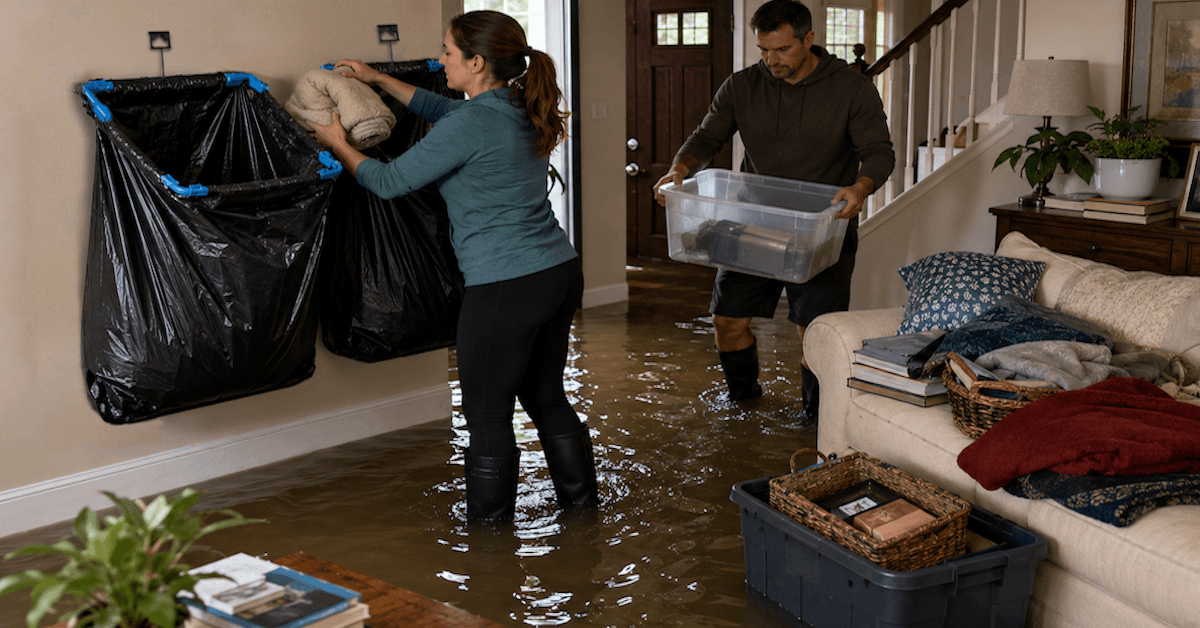
Water doesn't wait for you to finish stacking sandbags. By the time most people notice their basement is flooding, there's already an inch moving across the floor, and everything sitting on that floor is now in its path.
Sandbags at the door. A sump pump running nonstop. That's the standard way to protect your house from flooding, and it's not wrong. It just answers a different question. It protects the house. It does nothing for the shoe rack by the stairs, the box of tax documents under the workbench, or the shoebox of baby photos that's been sitting on a shelf since 2019.
That's the part most basement flooding guides skip, and it's worth fixing, because losing the water heater is an insurance claim. Losing the photos isn't. This is about how to protect your belongings from flooding, specifically the small, light stuff on the floor: shoes, document boxes, photo albums, decorations, tools, a change of clothes. Your desk, your sofa, your appliances, and the rest of the heavy furniture need a different answer. More on that below.
The Flood-Prep Playbook Everyone Knows (and Its Blind Spot)
Search "basement flood prevention tips" and you get the same list every time: clear the gutters, grade the yard away from the foundation, install a sump pump with battery backup, keep sandbags on hand, know where the shutoff valve is. FEMA's own guidance follows the same shape. Keep water out. Get it out fast if it gets in.
That advice works. It's also incomplete, because it assumes the fight is won or lost at the wall. Basements flood from the floor up, through drains, cracks, and window wells, so the first inch of water shows up underneath everything you own before the wall has even started leaking. A pump that's still catching up, or a storm that outpaces however much prep time you had, and that first inch happens anyway.
Real flood prep has three jobs, not two: keep water out, remove what gets in, and get your stuff out of its path before it arrives. Most checklists stop at two.
"Just Elevate It" Sounds Simple. It Isn't.
The standard fallback for that third job is "move your valuables to higher ground." Onto a shelf. Into the attic. Upstairs. Fine advice, and nobody actually tells you how to do it when your basement doesn't have any of those options.
A few things get in the way fast:
- Not every basement has an attic hatch, a garage loft, or a spare closet upstairs with room to spare.
- A shelf buys you a few inches. If the room floods eight inches deep, a coffee table doesn't help.
- Soft materials wick water even while "elevated." A couch cushion sitting an inch deep, or just parked in flood-level humidity for a few hours, soaks up moisture like a sponge. Propped up isn't the same as dry, which is exactly why real furniture needs to be carried out, not propped.
- Cardboard folds almost the second it gets wet. That box of photo albums under the workbench is usually the first casualty.
- Plastic totes help some, but an empty one takes the same shelf space as a full one, they're heavy to haul up in a hurry, and once water clears the seam line they leak, float, or tip.
So "elevate it" is the right instinct. Most people just don't own anything that makes it fast, cheap, or repeatable for the stuff that actually matters.
What You're Really Trying to Save
Say it out loud and it sounds obvious: insurance replaces a water heater. It doesn't replace your grandmother's letters, the hard drive with your kid's first five years on it, or the shoebox of photos nobody ever got around to scanning. That's the stuff people cry about after a flood, and it's usually not the expensive stuff. It's a box that's been sitting quietly on a low shelf, forgotten right up until the water found it.
Fire does the same math. Different disaster, same box on the same low shelf, same result.
The Missing Middle Ground: Hang It Instead of Stack It
Between "nowhere higher to put this" and "I don't have totes for everything I own" sits an option most people never think of: get things off the floor by hanging them, not stacking them. Not a furniture fix. A fix for everything that normally just sits around the furniture: shoes, document boxes, photo albums, tools, a change of clothes.
The BagEZ frame is a lightweight clip-on hoop that turns an ordinary trash bag into an open, wall-mounted bin. Clip it to a stud, a joist, a hook, or a shelf bracket well above the floor, drop your items straight in, and leave it hanging until the water's gone.

A few reasons that matters here specifically:
- It gets things above the water line, not just off the ground. Clipped to a stud or joist, items sit feet higher than a shelf or table, the same "move it up a floor" logic, applied to a basement that doesn't have a floor to move things to.
- It holds up to 55 lbs, so it's not just for a shoebox. Shoes, tools, electronics, document boxes, decorations, and a spare change of clothes all fit.
- It clips on in under a minute, no tools, which matters when a flood watch gives you twenty minutes, not two days.
- The 16" x 17" frame keeps the bag rigid and wide open, so you can drop items in one-handed instead of wrestling a floppy trash bag while water climbs your ankles.
- It folds flat, like a coat hanger, so it lives in a drawer between emergencies instead of eating shelf space it doesn't need to.
Clothes Count Too
Most flood-prep advice skips clothing entirely, which is strange, because if you have to leave the house, you need something dry to wear. Hang a set of clothes in the frame and you get a few things a plastic bin can't offer: zero floor space, contents you can see at a glance instead of digging for, and a grab-and-go handle when you're already carrying a kid or a dog. That matters in a shelter as much as it does at home. Nobody wants to be sorting through a water-logged duffel bag at 2 a.m.
It Moves With the Water
Here's the part most storage solutions can't do at all. If the water keeps rising, you're not stuck. Lift the frame off the lower hook or nail and clip it onto a higher one, a rod, a joist further up the wall, wherever you've got. Takes seconds. No unpacking, no repacking, just move the whole hanging bag up and keep going. A fixed shelf can't chase the water line. This can.
It's not a replacement for sandbags or a sump pump. It's the piece those two were never built to cover.
How to Use It: The 4-Step Flood Response

- Water rises. Everything sitting on your basement or garage floor, shoes, tools, storage bins, decorations, is now at risk.
- Clip it. Attach the BagEZ frame to any stable hook, stud, or nail. No assembly, no tools.
- Fill it. Drop items straight into the open, hanging bag. The frame holds it wide open so you're not fighting a floppy trash bag one-handed.
- Move it if you need to. Water still rising? Unclip and reclip higher in seconds.
When it's over: unclip, dump or keep the bag, wipe down the frame, fold it flat. Ready for the next leak, the next storm, the next move.
Where This Fits in a Real Flood Prep Kit
Three jobs, working together, not one product doing everything:
- Keep the water out. Sandbags, door barriers, proper yard grading.
- Remove what gets in. A sump pump with battery backup, a wet/dry vac.
- Get your belongings out of the way. Heavy furniture and appliances (desks, sofas, dressers, the water heater) need to be physically carried out if you have the time and the hands, or accepted as at-risk and left to insurance. Everything else, the loose, light stuff scattered across the floor, is where a hanging system does the work.
That third job matters just as much in a garage, a storage room, or a closet as it does in a finished basement. It also covers leaks, burst pipes, and general storm damage, not just a rising river or an overwhelmed storm drain.
Frequently Asked Questions
Do sandbags protect what's already inside my basement?
No. Sandbags and pumps manage water at the entry points. They do nothing for the shoes, boxes, and storage already sitting on the floor once water starts coming through drains or cracks.
How high do I need to elevate my belongings during a flood?
As high as you can get them, ideally onto a different floor entirely. If that's not an option, get items well above where standing water typically reaches. A few inches on a shelf usually isn't enough. Several feet up on a wall-mounted hook is a meaningfully safer bet, and it's the one you can raise again if the water keeps coming.
What are my elevating furniture options to prevent flood damage?
For actual furniture, sofas, dressers, desks, mattresses, your real options are carrying it out to a higher floor or garage, or using furniture risers to buy a few extra inches. It's too heavy and bulky to hang. A wall-clipped system helps with everything that normally sits on the floor around that furniture and has no elevation option of its own: shoes, document boxes, photo albums, clothes. It's not a furniture solution.
Can I use BagEZ to protect furniture or other heavy items?
No. It's rated to hold up to 55 lbs and built for loose, lightweight items, not desks, tables, sofas, or appliances. For those, you either move them before the water arrives or accept the risk and let insurance handle it.
Will plastic totes keep my things dry?
Sealed totes with locking lids help, but they're heavy, take up shelf space whether they're full or empty, and once water clears the seam line they can still leak, float, or tip over.
What about cardboard boxes?
Skip them for anything flood-risk. Cardboard wicks moisture almost immediately and can fall apart within minutes of contact with water or even high humidity.
Can I hang clothes in it, or just boxes?
Both. Fold a spare outfit in with your documents and you've got something dry to change into if you need to leave. You can see what's in the bag at a glance, which matters when you're grabbing it in a hurry.
Is a BagEZ frame reusable after a flood?
Yes. Water-resistant, wipes clean, folds flat between uses. Built for repeat floods, leaks, and cleanups, not a single emergency.
Where This Actually Matters
Somewhere in every flooded basement is a box nobody thinks about until it's gone: the photos, the birth certificates, the letters. Sandbags were never going to save that box. A hanging frame that clips on in a minute, holds a change of clothes alongside it, and moves with the water when it has to, might.
Related reading: BagEZ at Outdoor Events: Picnics, Parks, and Camping · Keep Yard Work Organized with Industrial Bag Frames
Keep what matters most safe, dry, and ready, no matter what.