Cart
0
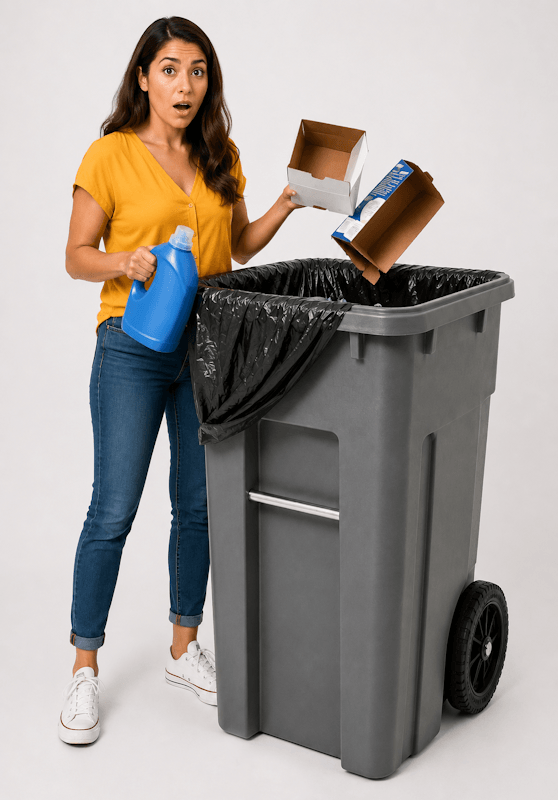
Your garbage bag falls in. You fish it out. You fold it back over the rim. A week later it falls in again. It keeps happening because the fixes most people reach for were never solving the real problem to begin with. Here's what's actually going on — and what does work.

The Rubber Band Problem Is Bigger Than You Think
Trash can rubber bands have been around forever. You can find them on Amazon, at Walmart, at every hardware store. PlasticMill sells them. Plasticplace sells them. Companies like Hongmed have built entire product lines around elastic straps for garbage cans. For a long time, they were the only answer anybody offered.
The pitch makes sense on paper. Stretch a big elastic band over the rim, trap the bag overhang underneath it, and the bag stays put. Simple. Cheap. Done.
⚠️ The Problem
Rubber degrades. It doesn't matter how thick the band is — rubber loses elasticity over time, especially outdoors where UV exposure and temperature swings accelerate the breakdown. The bands that felt firm in week one start slipping in week three. By week five you're stretching them noticeably harder. Eventually one snaps while you're installing it, and you end up with a welt on your wrist and a trash can no better off than before.
And even when they're working perfectly, rubber bands don't solve the actual problems. They just mask one of them.
The Three Problems That Actually Need Solving
Three things actually go wrong with trash can liners. Rubber bands address one of them, partially, at the cost of creating new problems.
The bag falls in
Without anything holding it open, a liner collapses the moment you toss something heavy in. The bag walls cave inward, the liner settles to the bottom, and you're fishing a wet bag back up before every use. Rubber bands keep the overhang pinned to the rim but don't support the bag's structure inside the can — the liner can still collapse inward with a band in place.
The lid won't close properly
Oversized liners bunch up around the rim and create a gap when you try to close the lid. This is where bugs get in and where odours escape. A rubber band presses plastic against the outside of the rim but doesn't fix the bunching — it just shifts it slightly. The lid still sits at an angle because there's too much material at the top.
Bag changes are more work than they should be
You have to wrestle the band off to pull the full bag out, then re-stretch it around the new liner going in. With cold hands in January that's pretty unpleasant. With a tight band it pinches. With a band that's starting to wear, you're hoping it doesn't snap.

Why Does Every Rim-Based Fix Fail?
The fix isn't a better grip at the rim. The fix is to stop trying to hold the bag up entirely.
Here's the reason every rim-based solution eventually fails — and it's simple once you see it.
Rubber bands, clips, tape, and folding all try to hold the liner up by gripping the overhang at the rim. That means the entire weight of the bag and everything in it is pulling downward against that grip constantly. The heavier the bag gets, the more that grip is tested. It's a losing battle by design.
✓ What Actually Works
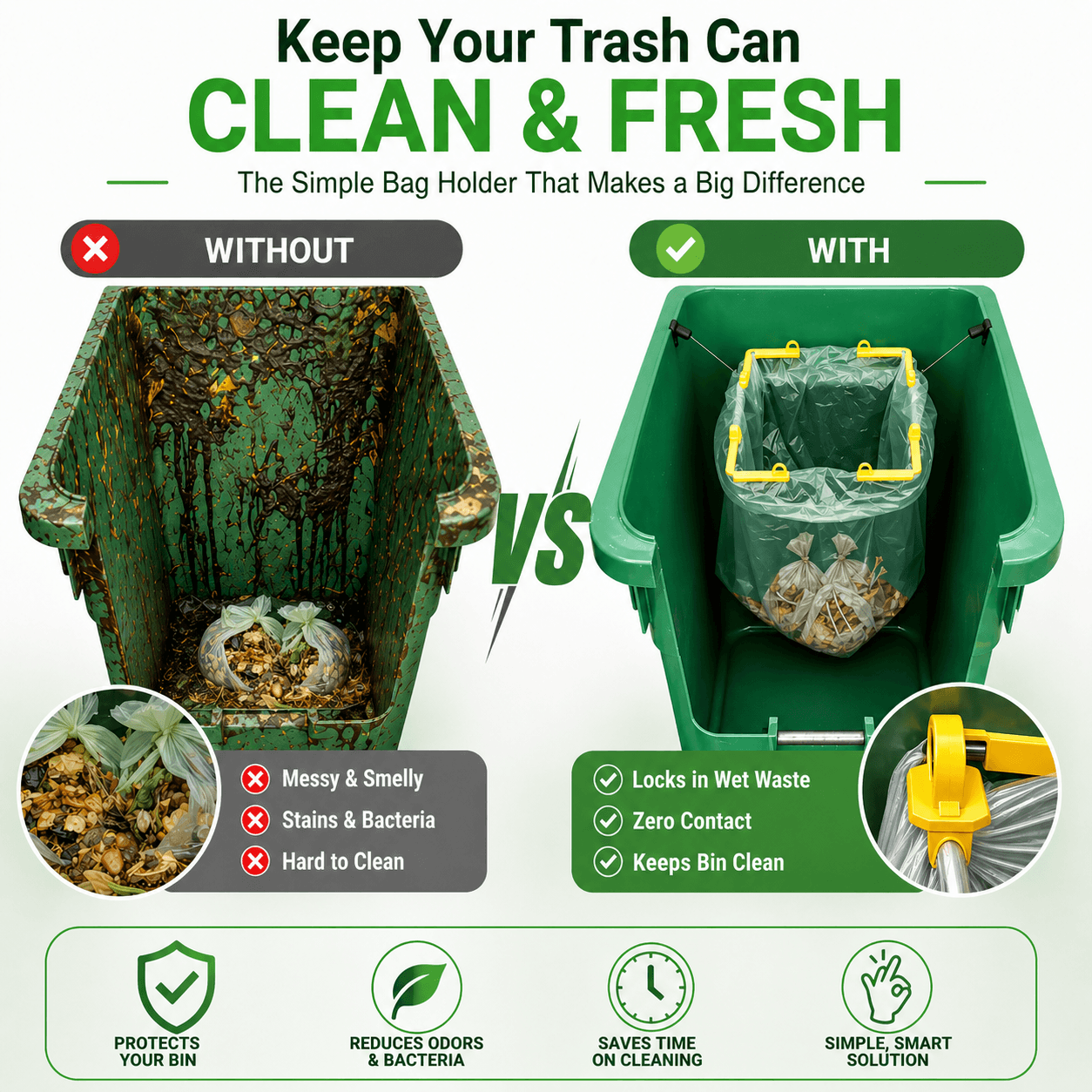
When a liner's bottom rests naturally on the floor of the bin, with its top held open by a rod spanning the inside of the can, gravity works with the system instead of against it. The bag is not hanging under tension — it's sitting down, open, with air around it. Waste goes in and settles naturally from the bottom up. The rod across the top is doing almost no mechanical work — it's just keeping the bag open.
Most people's reaction when they first see this is: "Oh. That makes sense. Why didn't anyone think of that sooner?"
How Does BagEZ Fix the Problem?

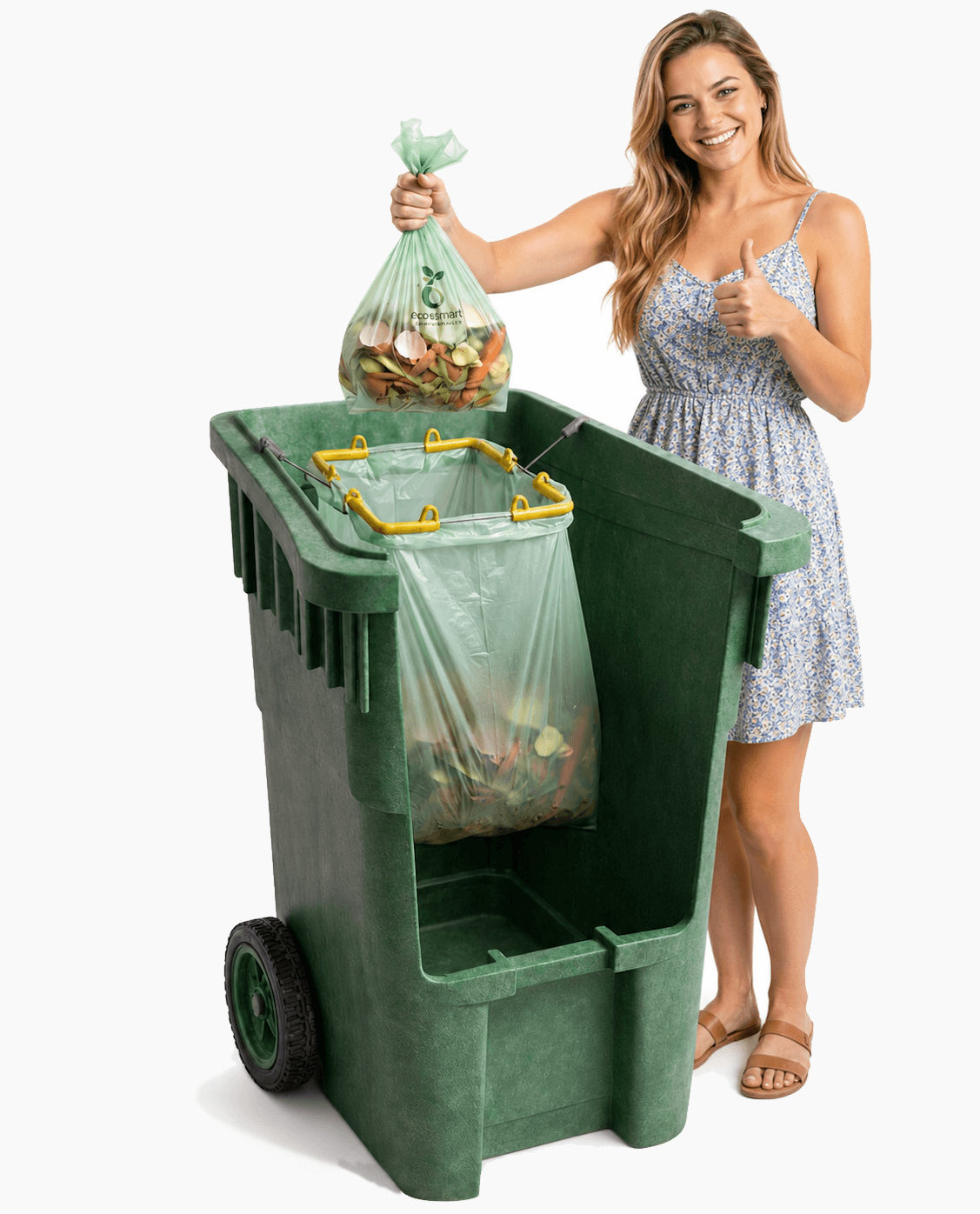
BagEZ is a powder-coated solid steel rod that spans across the inside of a large outdoor bin, holding the liner open from within — below the rim level, not over it. The rod clips under the raised interior lip that most large wheelie bins have — the ridge you can feel running around the inside of the rim. For bins without a raised edge, heavy-duty clips fix to opposite sides of the rim instead.
Drop a large bin liner in and the bag's bottom settles to the floor of the trash can. The bag opens naturally around the rod. You throw waste in and it fills from the bottom up exactly the way it should. The rod stays in position. The lid closes flat over the top because the liner is inside the rim, not bunched over it.
📅 On Garbage Day — 3 Steps
1
Pull the clips off the rod to release the lock.
2
Tie and lift the full bag out — the rod stays in the bin.
3
Drop a new liner in and re-clip. Done in about ten seconds.
 The BagEZ solution — lid closes completely, installs in seconds, pull-off locks for fast bag changes, and a sealed lid that controls odour and pests.
Because it's powder-coated steel, it doesn't degrade outdoors the way rubber does. No UV breakdown, no cracking in cold weather, no warping in summer heat. The rod is built to stay in the bin season after season.
Two Ways to Use BagEZ — and One Most People Don't Expect
Most people assume a bin liner works one way: bag goes in, everything goes in the bag, bag comes out. BagEZ makes a second option practical that most people haven't considered.
1
One bag for everything (mixed waste)
Use a 33–65 gallon liner. All waste goes in the bag. Replace when about 90% full. This is the standard setup that eliminates bag collapse, lid gaps, and rubber band hassle.
2
Split bin (separated waste)
Use a smaller 13–20 gallon liner for wet and messy waste only. Dry trash goes loose into the bin. Fewer large liners, cleaner bin, easier to wash. Only possible because BagEZ holds a small bag open inside a much larger bin.
Works in Any Bin
The primary design is made for the raised interior lip that most large outdoor bins have — the rod hooks under that ridge and holds itself in place. No tools, no permanent installation. For bins without a raised edge, the rod attaches using heavy-duty clips fixed on opposite sides of the rim. BagEZ works in both bin types, covering the majority of large residential, HOA, and commercial curbside bins in the 65 to 96 gallon range.
How It Compares to the Other Options
| Feature | Rubber Bands | Binder Clips | BagEZ (Steel Rod) |
|---|---|---|---|
| Stops bag falling in | ✓ Yes (when working) | ✓ ~90% of the time | ✓ Yes — every time |
| Lid closes fully | ✗ No | ✗ No | ✓ Yes |
| Bag supported open | ✓ Yes (holds to rim) | ✓ Yes | ✓ Yes — from inside |
| Works with oversized liners | ✓ Yes | ✓ Yes | ✓ Yes |
| Weather resistant | ✗ Rubber degrades | ✗ UV & flex wear plastic; ~4–5 months | ✓ Powder-coated steel |
| Bag change ease | ✗ Hard — stretch on/off | ◐ Moderate | ✓ Pull 2 clips, swap |
| Durability | ✗ Weeks | ◐ Months | ✓ Years |
| Controls odour & maggots | ✗ Low | ✗ Low | ✓ High |
What About Odour and Pests?
A properly sealed lid is the first line of defence against bin odour and pests. When the liner sits inside the rim and the lid closes flat, flies can't get in to lay eggs and odours stay contained between collections. That matters more in summer when warmth accelerates decomposition.
What to Actually Look For in a Garbage Bag Holder
If you're ready to stop dealing with rubber bands, here's what to evaluate when looking at a garbage bag holder for your large outdoor bin.
- Does it hold the liner inside the rim or outside? Outside-rim solutions leave the lid gap in place. You want something that keeps the liner at or below the rim so the lid seals properly.
- Does it support the bag's structure inside the bin? An elastic grip at the rim doesn't stop the bag collapsing inward. A rod or frame spanning the inside of the bin does.
- Is the hardware quick on bag change day? It doesn't need to be zero-step — it needs to be fast and simple. Pulling two clips takes a few seconds. Wrestling a rubber band off a full bin in cold weather does not.
- Is it built for outdoor use? Rubber breaks down outdoors. Thin plastic clips crack in cold. Look for powder-coated steel or equivalent materials that hold up through seasons.
- Does it work with your bin size? Most holder products are designed for 13 gallon kitchen cans. If you have a large outdoor wheelie bin in the 65 to 96 gallon range, you need something specifically sized for that.
The Short Version
Every common fix — rubber bands, binder clips, tape, folding over the rim — fails for the same reason. They all try to hold the liner up by gripping the overhang at the rim, which means gravity is constantly working against them.
- BagEZ reverses that — the liner rests on the bin floor, held open from inside by a steel rod.
- Gravity works with it — bag fills naturally, lid closes completely.
- Bag changes take about ten seconds — pull clips, swap, done.
- Powder-coated steel lasts through seasons without the degradation that kills rubber bands.
Stop Fishing Your Bag Out of the Bin
BagEZ holds your liner open from inside, so your lid seals and your bag never falls in again. Built for large outdoor wheelie bins. Powder-coated steel that lasts.
Shop BagEZ — View the Holder →Frequently Asked Questions
The bag is not being supported inside the bin, so as weight builds up, the walls cave and the liner slides down. Rubber bands keep the overhang at the rim but don't hold the bag structure open — so the bag can still collapse inward even when a band is in place. The fix is a rod or frame inside the bin that holds the liner open, letting the bag's bottom rest on the bin floor rather than hanging under tension from the rim.
In the short term, they keep the bag overhang attached to the rim. But they don't stop the bag from collapsing inward, don't fix the lid gap that oversized liners create, and the rubber degrades and snaps over time — especially outdoors. Most people find themselves replacing them every few weeks. For a long-term solution, a steel rod that holds the liner from inside the bin addresses all three problems rubber bands leave unsolved.
The most reliable method changes how the bag sits in the bin. A rod spanning the inside holds the liner open at the top while the bag's bottom rests naturally on the bin floor. The bag fills from the bottom up with nothing pulling it inward. Rubber bands and clips hold the bag up by gripping the rim, which means the bag's full weight is constantly pulling against that grip — which is why they slip. Letting the bag rest rather than hang solves the problem at the source.
They grip better than rubber bands and don't degrade the same way, but they share the same core limitation — they hold the liner from outside the rim, so the lid still doesn't seal properly and the bag can still collapse inward. They also scratch plastic bins over time. For a large outdoor bin, a rod-based internal holder is more effective and more durable.
Large outdoor bins — 65 to 96 gallon curbside cans — are where liner problems are worst because there's more surface area to collapse and the lid gap is more significant. A steel rod that hooks under the bin's interior raised lip and spans across the inside holds the liner below the rim level. The lid closes completely, the bag fills naturally, and on collection day the clips release for a quick bag swap.
Compostable bags are usually oversized relative to the bin, which makes the lid gap problem worse than with standard liners. A rod holder that keeps the bag inside the rim rather than bunched over the outside lets the lid close cleanly with bags up to 65 gallons. It also works for the split bin method — using a smaller compostable bag for wet waste only while dry waste goes loose in the bin.
Green bins and compost bins present the same structural problem as other large outdoor cans, with the added issue that compostable liners are heavier when wet and tear more easily when they collapse. Holding the liner open from inside the bin keeps it from collapsing under waste weight, and a properly sealed lid keeps flies out — which is directly connected to preventing maggots during warmer months.
Yes. The primary design hooks under the raised lip found inside most large outdoor bins. For bins without that raised edge, heavy-duty clips fix the rod to opposite sides of the rim instead. The result is the same — the rod spans the interior of the bin and holds the liner open below the rim level.
Most large outdoor curbside bins use 65 to 96 gallon liners. Standard household kitchen bags (13 gallon) are far too small. Look for extra-large bin liners in the 65–96 gallon range or lawn-and-leaf style bags, which are oversized enough to fold over the rim. With an internal holder you can also use a smaller 13–20 gallon liner for wet waste only, leaving dry trash loose in the bin — which stretches your liner supply further.
For large outdoor bins in the 65–96 gallon range, the most effective holders support the liner from inside the bin rather than gripping the overhang at the rim. Internal rod-based holders keep the bag below the rim level so the lid closes completely — the key practical difference from rubber bands and clips that leave the lid open. Look for powder-coated steel construction for outdoor durability and a quick-release mechanism for fast bag changes on collection day.
Shop BagEZ Hanging Trash Bag Holders
Ready to solve the problem? Choose the BagEZ size that fits your setup:
- BagEZ 10x13" Compact Holder — $19.99 · Ideal for kitchens, camping, RV & small spaces
- BagEZ 13x13" Medium Holder — $24.99 · Great for wheelie bins, garages & outdoor use
- BagEZ 16x17" Large Holder — $29.99 · Perfect for large bins, green bins & event venues
- BagEZ 3-in-1 Bundle (Best Value) — $60.00 · All three sizes — one solution for every bin