Cart
0
Quick Answer
What size trash bag do I need for my commercial bin?
Match the liner to your bin's internal dimensions — not its gallon rating. Add 6–8 inches to height and width for adequate overhang. Use the sector chart below to find the right liner size and gauge for your specific waste type, from 2-gallon desk bins to 100-gallon industrial drums.
In This Guide
4
Container Categories
6
Sectors Covered
4
Gauge Tiers
Steel
BagEZ Frame
Walk through any large facility and you'll spot the same problem repeated across departments: bags that slip down into bins, bags with so much overhang they billow out uselessly, bags that split when someone tosses in a wet box. It's rarely a bad bag — it's the wrong bag for that specific container and that specific load.
This guide is a practical reference for matching liner dimensions to the containers you're actually working with. We've organized it by receptacle type, sector, and waste category so you can build a real sizing chart for your facility without having to guess. According to the EPA's Sustainable Materials Management data, the average American generates over 4.5 lbs of solid waste per day — getting your liner system right is the first step to managing that volume efficiently.
Why Getting the Dimensions Right Matters
A bag that doesn't fit properly creates problems that compound quickly. Too small and it tears when you pull it up and out; too large and it folds at the bottom, creating a hidden pocket of mess that's unpleasant to deal with — and a slipping hazard if liquids are involved. Neither scenario is about bag quality. It's about fit.
Get the fit right and a mid-grade liner will outlast and outperform an expensive one used incorrectly. That's the core argument for taking sizing seriously.
Common Container Types and What Actually Fits Them

Desk-Side Wastebaskets (2–5 gallons): Typical internal dimensions sit around 12″ H × 10″ W × 8″ D. A 16″ × 20″ liner in the 2–3 gallon range fits without excessive folding at the rim. These are high-turnover bins — changed frequently but never very heavy, so light-gauge film works fine here.
Kitchen and Breakroom Cans (10–20 gallons): Usually 24″ H × 18″ W × 16″ D internally. A 24″ × 30″ liner in the 15–20 gallon range is the target. These catch wet food waste and packaging, so move up to mid-weight gauge — thin liners split when someone drops a wet tray in during a busy afternoon.
Janitorial Carts and Large Bins (30–45 gallons): Internal dimensions typically around 33″ H × 23″ W × 24″ D. A 33″ × 48″ liner handles the volume. Because these get heavy fast, anything below 1.5 mil is a risk — the load shifts during transport and that's where seams fail.
Industrial Drums and Roll-Off Skips (55–100 gallons): A standard 55-gallon drum is roughly 36″ H × 24″ diameter. Liner sizes run from 45″ × 60″ up to 60″ × 90″ depending on your drum. Extra-heavy gauge is non-negotiable at this scale.
Sector-by-Sector Quick Reference
The same container can need completely different liners depending on the industry. A 10-gallon bin in an office catches paper; the same bin in a food-service back-of-house catches wet waste. Here's how the breakdown maps:
What Goes In the Bag Changes What Bag You Need
Dimensions get you the right size. Gauge gets you the right strength. And the right gauge comes down to what's actually being thrown in.
Paper and dry packaging are forgiving — bulky but light, and a thin-walled bag handles them fine. Wet food waste, liquid containers, or anything with a sharp edge is a different story. Construction debris is in its own category entirely: broken drywall, scraps of framing lumber, busted tiles — these shred through a standard heavy-duty bag if it's not rated for abrasives.
A useful rule: size the liner gauge to your worst-case load, not your average. If the kitchen bin occasionally catches broken bottles from the bar, that's your design condition — not the Tuesday lunch cleanup.
Building Your Facility's Sizing Chart
The process doesn't need to be complicated. One person walking your facility for a couple of hours with a measuring tape and a notepad gets you 90% of the way there. Walk every zone and log each bin type — internal dimensions and typical fill rate. Then spend a few minutes in each area during a normal shift observing what actually goes in. "Mixed recyclables plus wet coffee cups" and "dry paper only" are different liner specs even if the bin is the same size.
Once you have those notes, match each container to the nearest standard liner size in your supply catalog and order small trial quantities. Run them for two weeks, watch for tears, slip-ins, or excess overhang, and adjust from there. That feedback loop is how you get to a chart that actually holds up in practice.
Liner Thickness at a Glance

Bag thickness is measured in mils (thousandths of an inch). Here's what each tier handles in practice:
0.6–0.8 mil — Light-duty
Right for 2–5 gal bins handling paper and dry materials. Don't over-engineer this category.
1.2–1.5 mil — Mid-duty
The workhorse tier for 10–20 gal kitchen and breakroom cans with food and mixed packaging.
2.0–3.0 mil — Heavy-duty
Built for 30–45 gal janitorial and warehouse bins where loads get heavy and wet.
3.5+ mil — Extra-heavy
Required for drum liners and industrial skips. If you're dragging the bag to a dumpster, this is your tier.
If you're seeing repeated tears with your current bags and haven't looked at gauge recently, that's worth checking before assuming it's a brand problem.
Locking It Into Your Supply System
Once you've settled on specifications, assign unique SKU codes to each dimension-material pairing and get them into your purchasing system. Set minimum reorder thresholds so stockouts don't happen mid-week. Train whoever places internal orders to reference the chart rather than eyeballing it — that's where drift happens, and it slowly undoes the work you put into getting the sizing right in the first place.
The Cost and Sustainability Upside
Right-sizing isn't just about reducing failures — it also cuts unnecessary spend. Over-specifying gauge adds cost per bag across thousands of annual purchases without buying any meaningful benefit. Companies that run a proper sizing audit often find they've been using 2.0 mil bags in zones that a 1.2 mil liner handles cleanly. Closing that gap on a large facility adds up. It also reduces plastic consumption, which matters if your organization is tracking sustainability metrics.
Complete the System: Pair the Right Bag with the Right Holder
Even a perfectly sized liner underperforms without something holding it open. A bag that slips down into the container, collapses mid-shift, or requires a staff member to hold it open during disposal adds labor time and creates spill risk — regardless of how well the dimensions fit.
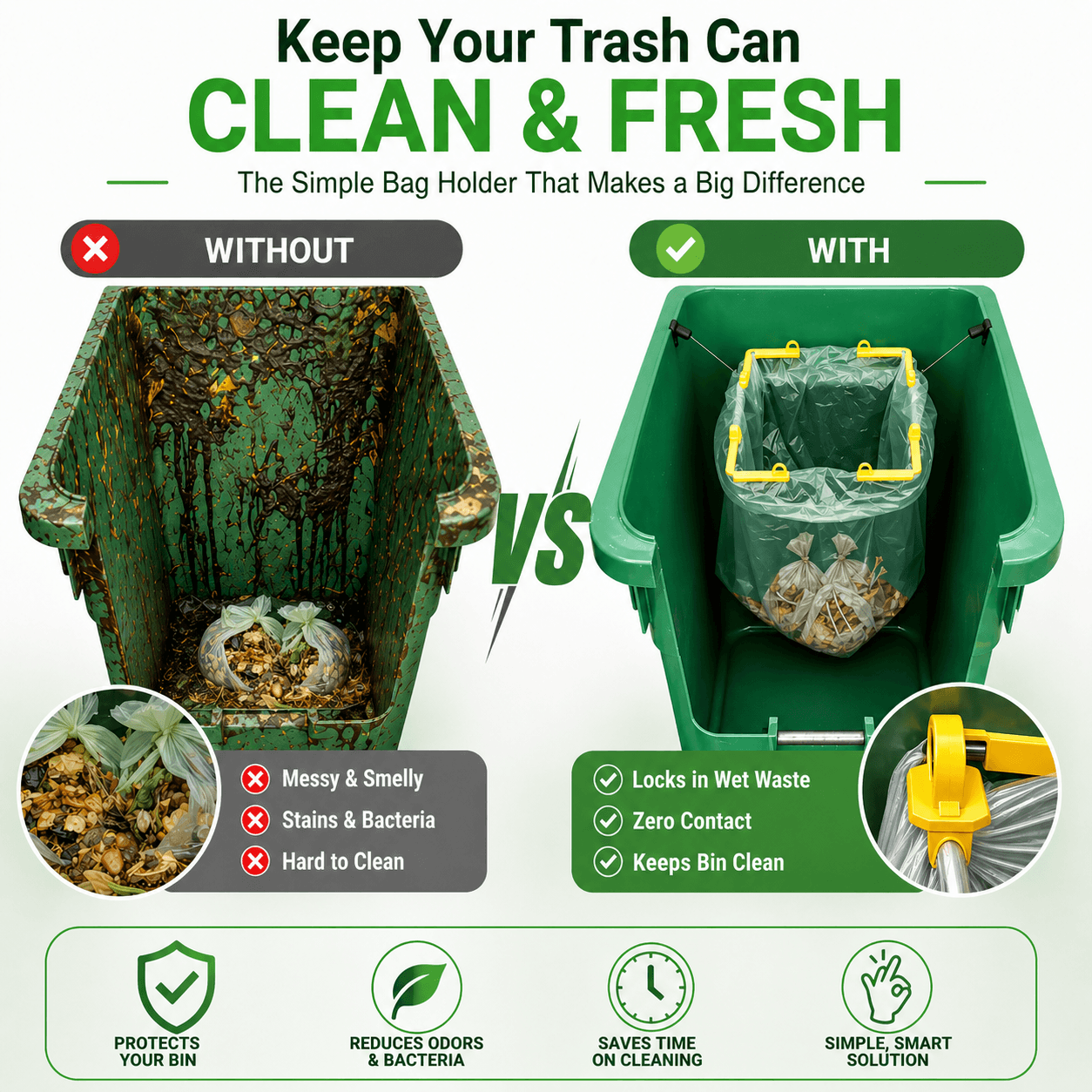
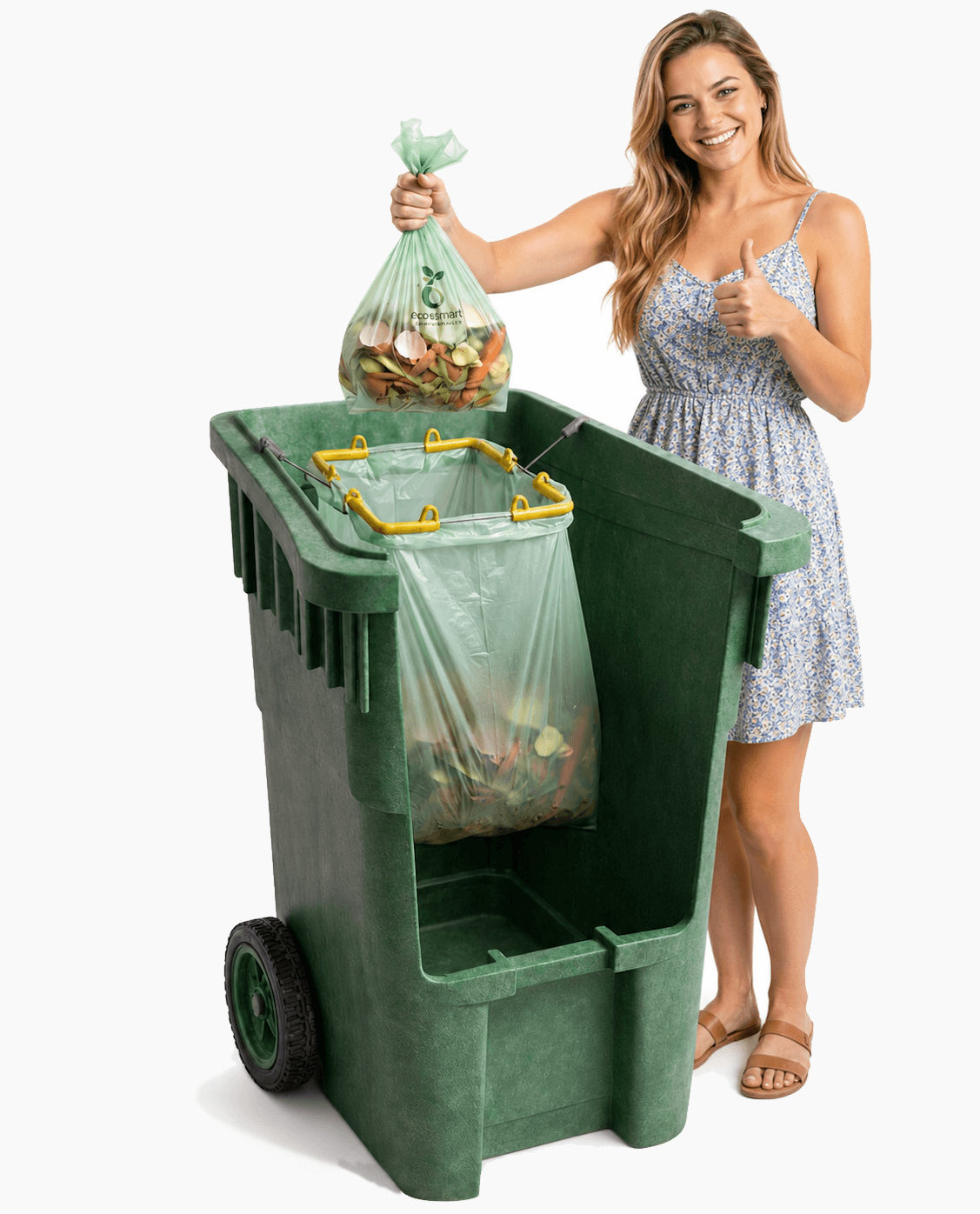
The BagEZ steel trash bag holder handles this across every container category in this chart. Available in three sizes for bins from 13 to 96 gallons, BagEZ clips any standard liner open and holds it stable inside the container. Bag swaps take seconds and leave no mess. Pair the right liner dimensions with a BagEZ holder and you've got a system that runs cleanly through any shift — from small office wastebaskets to large industrial drums.
Stop Guessing — Get the Right Liner Every Time
Pair your perfectly sized liner with a BagEZ steel frame and eliminate slip-ins, collapses, and spill risk across every station in your facility.
Shop BagEZ Holders →Get Sizing Tips & BagEZ Updates
Join other facility managers getting practical waste management advice.
Frequently Asked Questions
How do I calculate the right liner size for a commercial bin?
Measure the bin's internal height, width, and depth. Add 6 inches to the height for overhang and 2–4 inches to both width and depth. That gives you your target liner opening dimensions. Always measure internal dimensions — bin exterior measurements are meaningless for liner sizing.
What gauge trash bag is best for commercial kitchen use?
Commercial kitchens should use 1.2–1.5 mil (mid-duty) for standard food waste. If your bin receives sharp packaging, glass, or wet heavy loads regularly, move to 2.0 mil. Never use light-duty bags in a food-service environment — the first wet tray dropped in will split the seam.
What's the difference between mil and micron in bag thickness?
Mil is the US standard (thousandths of an inch); micron is metric (thousandths of a millimeter). To convert: 1 mil = approximately 25.4 microns. A 1.5 mil bag equals roughly 38 microns. Most North American suppliers use mil; many imported bags list microns — knowing the conversion helps you compare specs accurately.
Can I use the same liner for recycling and general waste bins?
The dimensions and gauge can often be the same if the bins are the same size, but color-coding matters. Use clear or blue bags for recycling and black or grey for general waste — this prevents cross-contamination during collection and helps staff sort correctly at a glance. The liner spec is about fit and strength; the color is about waste stream separation.
How often should commercial trash bags be changed?
Change based on fill level and odor, not a fixed schedule. High-volume areas like commercial kitchens may need bag changes every 2–4 hours during service. Office bins may be fine with daily changes. The rule: never let a bag exceed 80% capacity — the last 20% is where tears and spills happen. A proper bag holder keeps the liner open and visible so staff can see fill level at a glance.
Shop BagEZ for Your Facility
🏢
BagEZ Medium 13×13
For office and breakroom bins 10–20 gallons. Holds liner open hands-free.
Shop Medium →Best for Commercial
🏭
BagEZ Large 16×17
For janitorial and high-volume bins 30–55 gallons. Built for heavy commercial loads.
Shop Large →📦
BagEZ 3-in-1 Bundle
All three sizes — cover every bin category from desk-side to industrial drum.
Shop Bundle →